Delaying the 5G Fund?

Small wireless carriers are asking the FCC to delay the implementation of the 5G Fund for Rural America. This new funding mechanism was approved by the FCC in August 2024 and is aimed at improving rural 5G coverage.

On January 13, a group of nine cellular carriers petitioned the FCC to delay implementation of the 5G Fund. The petition asks for a delay for several reasons:

  • They think the FCC needs to see if the Supreme Court declares the Universal Service Fund to be constitutional.
  • The don’t like that the FCC based the decision on areas that are eligible for funding on FCC maps of stationary 5G coverage while also mandating that 5G fund recipients must meet performance requirements for in-vehicle coverage.
  • The awards should be coordinated with BEAD grants to avoid funding overlapping federal awards.
  • The 5G fund gives a bidding incentive for the use of Open RAN technology, something that has not been popularly received by the industry.
  • The 5G Plan does not consider existing support being paid for rural cell towers.

On February 6, the Competitive Carriers Association filed a Petition for Review in the U.S. District Court of Appeals for DC. This petition echoed some of the claims made by the above petition, and found these additional shortcomings of the 5G Fund:

  • The FCC provided no evidence or support for designing the fund to be able to provide a minimal amount of cellular speed.
  • The FCC established a speed goal for the 5G Fund that ignores the FCC statutory requirement to make sure that urban and rural speeds are reasonably comparable.
  • The FCC is relying on cellular maps that overstate mobile broadband coverage despite significant evidence that the maps are inaccurate and unreliable and do not include any build-out that will arise from the BEAD program awards.
  • The FCC provided no evidence for the proposed size of the fund of “up to $9 billion”.

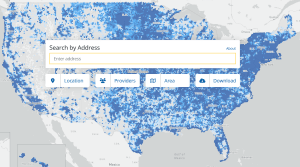
These pleadings recognize that there was an earlier petition from the Rural Wireless Association that described the inaccuracy of the FCC’s cellular maps. Most people are unaware that cellular carriers must report coverage to the FCC twice a year and that the data is included on the FCC’s National Broadband Map. Type in an address and you’ll see a menu choice to view fixed broadband or mobile broadband. RWA claims the data provided by cellular carriers to the FCC is highly inaccurate and thinks the FCC should clean up the mapping data before choosing areas that are eligible for federal funding.

One would have hoped that the FCC would have learned a lesson from RDOF about launching a funding plan based on poor mapping. But the August 24 vote to move forward is evidence that they didn’t learn that lesson. The FCC approved launching the 5G Fund sometime this year. With all of the turmoil at the FCC and other administrative agencies, it doesn’t seem unreasonable that the FCC might pause the program – but who know?

FCC Promoting Bulk Cellular Speed Tests

The FCC announced a public workshop for December 10 at 3:00 EST to describe the process for challenging the FCC cellular data maps. Here is a link for registering for the session, although I have to think a recording of it will be made available afterwards. The primary purpose is to discuss how local governments can submit bulk challenges to the FCC cellular data map.

In September, the FCC announced a new $9 billion 5G Fund for Rural America that will be used to bring cell towers to rural areas with poor coverage. To qualify for new towers, an area must have no 5G coverage today or have 5G speeds below 7/1 Mbps.

The FCC announced it would launch the 5G Fund in 2025 using the current FCC cellular maps. The data for these maps is collected twice per year in the same process used to create the FCC broadband maps. The FCC cellular maps seem to be far worse than the broadband maps have ever been. In the few dozen counties I have looked at, the existing FCC maps badly overstate 5G coverage. My observations are supported by comments from the Rural Wireless Association (RWA), which represents smaller cellular companies, which told the FCC that the cellular maps are highly inaccurate.

I’m not entirely sure why the FCC is holding this online meeting. If the FCC launches the 5G Fund using the current maps, then many counties with poor coverage will not be considered for expanded new cell sites. It’s pure speculation on my part that perhaps the FCC wants feedback from the public for cellular coverage. Many parties, including me, filed comments at the FCC asking to give local governments a chance to provide inputs to the maps.

While the FCC hasn’t officially said they are pausing the 5G Fund, that is something that might naturally happen with a change in leadership at the FCC. Perhaps this FCC meeting about map challenges is a sign the FCC is pausing the 5G Fund effort.

The FCC has a bulk speed test process that local governments, tribes, or consumer groups can conduct. The rules are complicated. The speed tests can’t be taken from an iOS phone (Apple). The speed tests must spread across each hexagonal area in the FCC map (about one square kilometer each). Speed tests have to be taken at different times of the day. The speed tests must conform to the same parameters used for individual speed tests. Probably the hardest compliance issue is that there must be separate tests for each cellular carrier, since each claims a different coverage footprint. That means having testers subscribed to each carrier, each willing to take many tests in the areas where coverage is suspected to be poor. The last kicker is that, as everybody knows, it’s impossible to take a speed test in an area that has no coverage – something the FCC rules seem to ignore.

I think it’s worthwhile for local governments to consider organizing a bulk speed test. Plans are routinely put on hold at the FCC every time there is a new Chairman. It’s possible that the 5G fund won’t launch for a while and that bulk speed tests might influence where that funding goes.

My Wish List for the New FCC

A change of administration brings a change to the FCC as the majority swings from Democratic to Republican. I’ve always maintained a regulatory wish list, and the following are my hopes for what we’ll see out of the new FCC. These aren’t predictions – just my own list of hopes. I note that the current FCC didn’t grant me very many of the items on my wish list four years ago.

Keep Going with the 5G Fund – But Get the Maps Right First. We’ve spent a lot of energy in the last five years talking about the rural broadband gap. However, from my experience in working in rural America, there is a much bigger cellular coverage gap. Millions of folks live in places where they can’t make or receive cell calls at home. What’s probably worse is that cell coverage is dreadful for the many more people who drive through rural areas as part of their job. The FCC’s proposed 5G Fund for Rural America could address a lot of this problem, but the FCC cellular coverage maps are far worse than any older version of broadband maps. I fervently hope the FCC doesn’t repeat the blunders it made in the past by relying on bad maps – like RDOF. I hope the FCC takes some time and gets the maps right before it hands out billion to fund new cell towers. If they do this right, this FCC will go on record as one that made folks’ lives better.

Enforce RDOF Buildout Requirements. Speaking of RDOF, we’ve reached the point where a substantial portion of networks funded by RDOF should have already been constructed. I know numerous counties that haven’t seen any construction yet from RDOF. The FCC should take a hard look at actual RDOF completion at the end of this year and should yank the funding from any ISP that isn’t meeting its commitments. The FCC should make an effort to verify claims of network completion – unlike with CAF II when large telcos fully fabricated many of the updates they had supposedly made. It’s not hard to pick up the phone and talk to local officials who can verify if they’ve seen new RDOF broadband networks being constructed.

Push Congress to Get Spectrum Auction Authority. I know this is already on the FCC’s wish list. While they are at it, ask Congress to give the proceeds of any auctions to the FCC to further universal service goals. It would be nice to see the 5G Fund improvements be required to be completed over a few years instead of spreading the requirement over much of the decade as was done with RDOF.

Say No to Big ISPs Once in a While. The FCC has a mandate, like any regulatory agency, to balance the needs of the industry and the needs of the public. Republican-majority FCC’s have always leaned towards the benefits of the big ISPs. Surprise everybody and make a few rulings that curb the worst excesses of the big companies – you’ll be praised for it.

Put Some Teeth Back Into the Consumer Complaint Process. The FCC complaint process has always been the last resort for customers who are treated poorly by ISPs. The FCC historically stepped in and demanded that ISPs take care of the worst individual abuses. This was always handled quietly behind the scenes and didn’t create precedents or new rules for ISPs. However, the complaint process curbed some of the biggest excesses when the ISPs knew the FCC was watching.

Do Not Declare Job Done and that Rural Broadband has Been Fixed. Making those kinds of announcements never goes well.

The Supreme Court Tackles the USF

The Supreme Court has agreed to review a decision from the 5th Circuit Court of Appeals, which ruled earlier this year that the Universal Service Fund (USF) is unconstitutional. Multiple lawsuits were filed by Consumers’ Research, a conservative non-profit advocacy organization. The Supreme Court accepted the case after there were conflicting rulings on the matter. Both the 6th Circuit and 11th Circuit recently ruled in similar cases that the USF is constitutional. The original lawsuits also alleged that the FCC acted unlawfully by delegating the operation of the USF to USAC.

The heart of the lawsuits relies on the nondelegation doctrine. This is a constitutional principle that believes that Congress can’t give its legislative authority to other parts of the government. In this specific case, the challenge is that Congress erred in delegating responsibility for the USF to the FCC, which is part of the executive branch of government. The nondelegation doctrine relies on Article I of the Constitution, which grants legislative authority to Congress, and argues that Congress can’t expand or delegate that responsibility. This hasn’t been used as a legal argument since the 1930s, in lawsuits filed to try to stop Franklin Roosevelt from creating New Deal agencies.

The Universal Service Fund was specifically created as part of the Telecommunications Act of 1996. This fund was originally created to support universal access to affordable telephone service, particularly in rural and low-income communities.

The function of the USF has been expanded over time to include four major programs: Connect America Fund, Lifeline, E-Rate and Rural Health Care. The Current USF is roughly $9 billion per year. USF is currently paying for the rest of the RDOF subsidy to build rural broadband infrastructure. The fund will also be covering the EACAM subsidy to fund faster infrastructure for rural telcos and cooperatives. The FCC recently announced it would be using USF funds to cover the $9 billion 5G Fund for Rural America.

Aside from this lawsuit, USF was already a hot topic in DC since it’s clear that the current way of funding USF is not sustainable. Currently, the USF is funded by a fee on interstate and international telecommunications services – a revenue stream that has been steadily shrinking. The new FCC Chairman Brandon Carr has been lobbying to spread the USF assessment base to include tech companies like Google and Facebook. Senator Ted Cruz, who will likely be the Chairman of the Senate Commerce Committee, has been suggesting that the USF should be funded with general tax revenues so that Congress can have a more direct say in how the money is spent.

The USF has also been in the news as a possible vehicle for funding a low-income subsidy for broadband. The USF currently supports the Lifeline program, which provides a $9.25 subsidy for qualifying households for telephone or broadband service. There was a lot of discussion during 2024 about trying to somehow move the now-dead ACP plan into the USF. This was the plan that provided a $30 monthly subsidy for broadband bills for qualifying households.

It’s not clear what might happen if the Supreme Court rules that the FCC doesn’t have the authority to operate the USF and to assess the fees that pay for it. Congress would have to intervene somehow to keep USF alive. Congress could do this by directly funding the effort. It could also create a specific tax to pay for the fund as a replacement for the FCC fees. If Congress is forced to jump through these hoops, it also seems likely that there will be an overall review of all parts and functions of the USF. This would include the role of USAC and the operating details of each of the four major USF funds.

What Survives from the Rosenworcel FCC?

Any time there is a change of administration at the White House the FCC gets a new Chairman and a new agenda – and we now know the new Chairman will be current Commissioner Brandon Carr. With a new Chairman comes new policies, but also a turn against some of the policies of the previous FCC. In today’s blog, I speculate on what might survive and what might get tossed from the agenda pushed by Chairwoman Jessica Rosenworcel.

There are a few things that obviously get reversed. First is net neutrality, which is poorly named and is really an effort to put some regulatory oversight on broadband. The new FCC has an interesting choice. Chairman Carr could act quickly to kill Title II regulation, like was done by Chairman Ajit Pai. The FCC could instead bide its time to see if the Courts kill it. Big ISPs appealed the reinstatement of Title II authority, and there is a chance that the Sixth U.S. Court of Appeals could side with the ISPs. That would be a stronger way to reject the issue than a reversal by the FCC.

It seems likely that Commissioner Carr will reverse Chairman Rosenworcel’s decision on discrimination. ISPs were strongly in favor of an intentional discrimination standard – one that means the FCC has to prove that an ISP is purposefully discriminating before it can take any action. The FCC instead chose a disparate discrimination standard, which means that discrimination can be proved by seeing the impact of ISP actions on the public. Congress required the FCC to adopt a discrimination standard, so it’s likely that the standard will be softened.

It gets a little harder after that to find policies that will get reversed. Part of the reason for this is that the Rosenworcel FCC wasn’t able to implement a lot of its ideas since it took several years to seat a fifth Democratic Commissioner after the 2020 election.

It will be interesting to see if the FCC will continue with plans for the 5G Plan for Rural America. This plan proposes to use $9 billion from the Universal Service Fund to bring new cell sites to rural America. The concept is popular, and I know a lot of rural counties that are excited about the idea. However, there is a big chance that a new FCC will instead reexamine the overall role of the USF – or that Congress will do so. The current USF is getting increasingly difficult to fund with a levy on voice services, and there are some aspects of the fund that are not popular in Congress.

For example, there are some big subsidies in the Universal Service Fund to build rural broadband, like finishing the RDOF and EACAM infrastructure spending. There are already rumors floating that there is a growing administration sentiment against spending federal money to build rural fiber. It would not be shocking to see these programs curtailed or even ended – possibly in favor of supporting rural satellite service.

There has been an open docket for a year looking at the issue of banning bulk billing for apartments. This is an attempt by the FCC to get more broadband choice for apartment tenants. This docket has been open for a long time with a lot of loud support against the idea from building owners and ISPs. This was always going to be tough to enforce since courts have often sided in the past with building owner rights over FCC rules. My guess is that this will never come up for a vote.

One of the big wins for the Rosenworcel FCC was an emphasis on going after spam robocallers. It’s hard to think this will be reversed, and more likely will be strengthened.

The FCC is always involved in a lot of issues that get little press. For example, the current FCC took another shot at making it easier to add fiber to poles. The FCC has been investigating ways to free up more wireless spectrum, although its hands have been tied when Congress let the ability for the FCC to auction spectrum lapse. It’s likely that most of the mundane things the FCC has been doing will continue.

Concerns with the 5G Fund

The previous blog summarized the basics of the order for the new 5G Fund for Rural America that will provide $9 billion to improve rural cellular coverage. This blog looks at some concerns I identify with the order.

Are the Maps Accurate? The Rural Wireless Association (RWA), which represents smaller cellular companies, recently sent a letter to the FCC that claimed the FCC cellular maps are still highly inaccurate.It’s easy to check claimed cellular usage around you. Once you’ve loaded your address in the FCC map, look at the Mobile Broadband tab at the upper right. You will see the claimed cellular at your address or at any homes around you by clicking on locations.

I live in Western North Carolina, and rural cellular coverage around me is terrible – like is true for much of rural America. When I look at the rural cellular coverage around me on the FCC map it’s hard to find unserved areas. When I dig into the details of the map, I find a huge hodgepodge in rural areas where one carrier claims to serve each rural location – one cluster of homes might be deemed served due to T-Mobile, a nearby cluster deemed to be served by Dish, and another neighborhood claimed by AT&T. This mix of 35/3 Mbps 5G coverage in very rural areas seems unlikely.

An interesting complaint from RWA is that the FCC cellular reporting only looks at cellular coverage at homes. RWA argues that in rural areas, this is measuring the wrong thing – home cellular coverage is important, but cellular coverage should be measured along the roads where people drive every day. The current map shows no coverage data for areas between homes.

No Specific Public Map Challenge. The FCC is not pausing to give citizens and local governments a chance to challenge the cellular map. In fact, the FCC might only issue the final map of areas eligible for the funding 30 days before the auction begins.

This is a big oversight. If the RWA is right about poor maps, then the public should be given a chance to make sure that areas without adequate cellular coverage are included in the 5G Fund. It seems like the FCC thinks the public and local governments have had enough time to challenge the maps since the FCC started the BDC mapping process a few years ago.

The methodology need to challenge the maps is not easy. Speed tests to challenge can only be taken using the FCC speed test app. There must be a lot of tests in a given geographic area for tests to be considered. Speed tests must be taken either from a stationary place outside (like pulling over along the side of a road) or inside a home. Only the outdoor tests matter for the 5G Fund. To be done right, speed tests must be done using phones from all of the major carriers, meaning AT&T, T-Mobile, Verizon, Dish, and any local smaller carrier that offers decent coverage.

It’s basically impossible to challenge a carrier that has overstated coverage areas – you can’t conduct a speed test for a carrier that isn’t there. I note in rural North Carolina that there are a lot of places claimed as covered by Dish – but I’m highly dubious that there are many, if any, Dish subscribers in these areas who could take an FCC speed test to verify this. This is true for any carrier that is not really present – nobody is going to have a phone subscribed to a non-working service.

It’s unlikely that many county governments have undertaken a formal effort to organize the needed speed tests. And even if they did, that challenge has to have happened in the last year to be relevant. I work around the country, and in most of the rural counties I’ve worked in recent years, I’ve heard that cellular coverage is even worse than broadband coverage – and that’s saying something.

I don’t want to sound too critical of this plan because poor rural cellular coverage is a huge issue. This has been needed for a long time. But after having taken four years to get to this announcement, wouldn’t it make sense to take six more months to allow local governments to prove that cellular coverage is poor or that the FCC maps are inaccurate? The FCC does not want to repeat the dreadful problem it had with RDOF based on faulty maps. If the FCC rushes this through without the chance for a map challenge, it will feel like the agency is rushing to grab headlines. Doing this right is vital because communities that get missed by this upgrade are likely going to be stuck with poor cellular coverage for a decade or more.

Community Action for the 5G Plan

I took the unusual step of publish two blogs today. The FCC announced the 5G Fund to improve cellular broadband in rural areas – and this second blog talks about several actions communities might want to consider immediately if your area needs better cellular coverage.

The FCC announced it will move forward with the 5G Plan for Rural America. This new subsidy will provide $9 billion to improve rural cellular coverage. I know in working throughout rural America that poor cellular coverage is often a worse problem that broadband coverage.

The FCC is convinced that the current cellular coverage maps are adequate to define the areas that deserve the new subsidy. In the counties I’ve been working in this does not seem to be the case, and the FCC cellular maps often seem to be overstating speed, similar to broadband speed claims. This was bolstered by a recent letter to the FCC from the Rural Wireless Association that claims that the FCC cellular maps are poor.

Since the FCC seems determined to move forward with the current maps and seems to be on a fast track to initiate the 5G plan,  there should be a sense of urgency in any County that thinks it needs better cellular coverage. The following steps should be considered immediately because it is possible that the FCC could launch the new 5G Fund by the end of the year.

First is to look at the FCC cellular map. This is part of the same map system used to show broadband coverage. Type in any address in a county, and a detailed map will appear. Choose the Mobile Broadband button at the top and you’ll be able to see the claimed cellular coverage at any address. The 5G Fund will bring better cellular coverage to locations where there is no 5G today (just 4G LTE) or where 5G speeds are claimed to be slower than 7/1 Mbps. You can look at the parts of your county where you believe cellular coverage is poor and see if the FCC map agrees with your local knowledge.

The 5G Fund subsidy will only be awarded to areas where the FCC map shows that no carrier is offering 5G with speeds of at least 7/1 Mbps. If even only one carrier meets that criteria, the area will not get funding. You might see some cellular carriers you don’t recognize in the FCC map like Project Genesis (which is Dish) or local cellular carriers.

A next step might be to dash off quick comments to the FCC about the 5G Fund timeline. Surprisingly, the FCC is not planning to have a map challenge period for counties to contest the cellular map coverage. Comments are due to the FCC by September 10. If nothing else, tell the FCC they should include some time for a map challenge. The FCC has been talking about launching this fund for four years, and it seems irresponsible to suddenly rush without giving local governments a chance to verify and challenge the FCC cellular maps.

There was a comment made in this docket that said local governments have had plenty of time to dispute the maps since the new FCC maps have been out for several years. However, all of the counties I have been working with have been concentrating on the FCC broadband maps. Almost nobody has looked hard at claimed cellular speeds – until this order came out, nobody knew what to look for on the maps. Making a comment in an FCC docket is relatively easy to do. The first thing on the form is to ask for the proceeding, which in this case is 20-32 Establishing a 5G Fund for Rural America.

Finally, if the FCC maps overstate cellular coverage in your area you need to get folks out taking cellular speed tests using the FCC app in the areas where you think coverage is poor. To be of any use for the 5G Fund the speed tests probably need to be done this month.

Speed tests can only be done using the FCC’s own speed test app. The app is available at the Google Play Store or Apple App store. Speed tests only count if they area taken outside or in a moving vehicle – indoor tests or tests on a WiFi network don’t county. For the 5G Fund, you want to take speed tests from a stationary point, which means pulling over on the side of the road. Tests must be taken between 6:00 AM and 10:00 PM.

You need to have phones subscribed to each carriers you want to dispute. If Dish is the only carrier claiming coverage in a rural area, the only tests that mean anything must be conducted from a Dish phone. Make sure when using the app that you are filing a challenge – it’s possible to use the app to check speeds without the results being sent to the FCC.

Finally, the FCC considers cellular map challenges as a crowd-sourced process. That means a lot of tests are required from each carrier in each disputed area. Taking a handful of tests won’t register with the FCC. Unfortunately, we don’t know how many tests are enough. I have no idea what happens if you try to test a carrier where there is no signal since your phone won’t be connected to broadband.


FCC Launches 5G Fund

On August 29, the FCC released a Second Report and Order that officially kicked off the process of launching the 5G Fund for Rural America. The FCC says in the order that there are 14 million Americans without access to 5G, and they are going to provide a $9 billion subsidy fund to bring better rural cellular coverage. Today’s blog will look at the key aspects of the order. There is a second blog today that talks about the possible need for quick action by communities in response to this order. There will another blog tomorrow discussing some of the issues with the order.

The idea of the 5G Fund has been around for a while. The idea was floated to create a $4.5 billion fund in 2019, and in 2020 the FCC announced it would increase the fund to $9 billion and use a reverse auction. The 2020 effort came to an abrupt halt when it became clear to the FCC that the maps of coverage provided by the largest cellular carriers were highly inaccurate. The FCC has taken steps to make better maps, and cellular carriers must now report cellular coverage data to the FCC twice a year in a process that parallels the collection of broadband data that this blog has often discussed. In this new order, the FCC says that it believes the cellular maps are now adequate to enable the launch of the 5G Fund.

The funding will be awarded using a reverse auction that is only open to cellular carriers. The 5G Fund can be awarded to areas of the country that don’t have at least one carrier with a 5G mobile wireless speed of at least 7/1 Mbps, is not in an urban area, and contains at least one home or business and some portion of a road. In practical terms, that means funding for rural areas that have no 5G today (just 4G LTE) or that have 5G claimed to be slower than 7/1 Mbps. Areas that don’t have any 5G today will get extra weighting in the reverse auction.

There is a further nuance that an eligible areas can’t already be getting a benefit from an existing FCC cellular subsidy. Many folks probably don’t realize it, but there has been a rural subsidy paid to cellular providers for years from the Universal Service Fund. Mobility Fund Phase II has been providing up to $500 million per year of support to rural cellular carriers. Unfortunately, the FCC’s cellular map doesn’t identify the areas that are being subsidized.

There will likely be changes made to the existing FCC maps before an auction. For example, both T-Mobile and Dish have to meet build-out requirements due to negotiated agreements with the FCC that have not yet all been completed – the final 5G Fund map should remove areas where that will be upgraded.

Winners of the reverse auction must upgrade 40% of the area in each state by the end of 3 years, 60% by the end of 4 years, 80% by the end of five years, and 85% by the end of six years. Completion means achieving a median speed of at least 35/3 Mbps with a minimum cell edge speed of 7/1 Mbps. It also means offering at least one service that includes a minimum monthly data allowance equal to the average U.S. subscriber data usage. That’s going to mean a data cap at some amount of data usage and possibly also a limit on voice and texting.

$765 million of the fund will be reserved for tribal areas. $900 million will be used as a 10% award additive to anybody willing to guarantee the use of Open RAN technology.

Service areas will be made up of hex-9 areas aggregated into census tracts. Bidding will be done using dollars per square kilometer.

The FCC might only issue the eligible area map 30 days prior to the start of the bidding. There will be a preview map issued earlier based upon vintage BDC mapping data.