
 Small wireless carriers are asking the FCC to delay the implementation of the 5G Fund for Rural America. This new funding mechanism was approved by the FCC in August 2024 and is aimed at improving rural 5G coverage.
On January 13, a group of nine cellular carriers petitioned the FCC to delay implementation of the 5G Fund. The petition asks for a delay for several reasons:
- They think the FCC needs to see if the Supreme Court declares the Universal Service Fund to be constitutional.
- The don’t like that the FCC based the decision on areas that are eligible for funding on FCC maps of stationary 5G coverage while also mandating that 5G fund recipients must meet performance requirements for in-vehicle coverage.
- The awards should be coordinated with BEAD grants to avoid funding overlapping federal awards.
- The 5G fund gives a bidding incentive for the use of Open RAN technology, something that has not been popularly received by the industry.
- The 5G Plan does not consider existing support being paid for rural cell towers.
On February 6, the Competitive Carriers Association filed a Petition for Review in the U.S. District Court of Appeals for DC. This petition echoed some of the claims made by the above petition, and found these additional shortcomings of the 5G Fund:
- The FCC provided no evidence or support for designing the fund to be able to provide a minimal amount of cellular speed.
- The FCC established a speed goal for the 5G Fund that ignores the FCC statutory requirement to make sure that urban and rural speeds are reasonably comparable.
- The FCC is relying on cellular maps that overstate mobile broadband coverage despite significant evidence that the maps are inaccurate and unreliable and do not include any build-out that will arise from the BEAD program awards.
- The FCC provided no evidence for the proposed size of the fund of “up to $9 billion”.
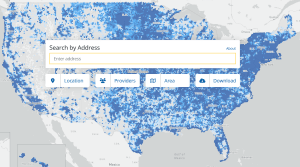
These pleadings recognize that there was an earlier petition from the Rural Wireless Association that described the inaccuracy of the FCC’s cellular maps. Most people are unaware that cellular carriers must report coverage to the FCC twice a year and that the data is included on the FCC’s National Broadband Map. Type in an address and you’ll see a menu choice to view fixed broadband or mobile broadband. RWA claims the data provided by cellular carriers to the FCC is highly inaccurate and thinks the FCC should clean up the mapping data before choosing areas that are eligible for federal funding.
One would have hoped that the FCC would have learned a lesson from RDOF about launching a funding plan based on poor mapping. But the August 24 vote to move forward is evidence that they didn’t learn that lesson. The FCC approved launching the 5G Fund sometime this year. With all of the turmoil at the FCC and other administrative agencies, it doesn’t seem unreasonable that the FCC might pause the program – but who know?