FCC Announced the 5G Fund – Again

FCC Chair Jessica Rosenworcel recently announced a proposal to finally launch the 5G Fund that would be used to build rural cell sites. This is an idea that has been around for a while.

The FCC originally planned to award $4.5 billion for this same purpose in 2019 under the name of Mobility Fund II. As the FCC prepared for that reverse auction, it asked cellular carriers for maps showing existing cellular coverage. It turns out that the maps provided by Verizon, T-Mobile, and US Cellular badly overstated cellular coverage, and smaller cellular carriers cried foul – since the maps would have excluded funding in the areas they serve. The FCC eventually agreed with the small carriers and canceled the auction. In April 2020, the idea was resurrected by Chairman Ajit Pai and was augmented by an additional $4.5 billion and retitled as the 5G Fund.

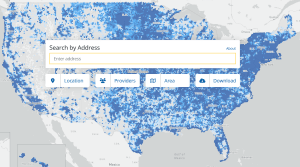
The original plans were delayed due to faulty maps provided by cellular carriers. The FCC now requires cellular carriers to report coverage using the same FCC maps used to report broadband coverage. If you go to that map you’ll see that there is a tab for mobile broadband as well as the one showing fixed broadband. I invite rural folks to go to the map and look at your address.

The first thing you’ll notice is that the FCC considers a place to be served if cellular data speeds are at least 7/1 Mbps. That’s a ludicrous definition of adequate cell coverage. The second thing you’ll probably notice, depending on where you live, is that the cellular carriers probably consider your area to be served. I live in Western North Carolina, and rural cellular coverage here is terrible in many places – like is true for most of rural America. Unfortunately, the current FCC map shows this region to be largely covered with cellular broadband.

I don’t think many folks have spent time looking at this map, but they hopefully will now that this plan has been announced. If your area is considered to be served on the FCC maps, it probably will not be eligible for new cell towers.

The FCC will likely wait until BEAD funds have been allocated to hold the reverse auction. This will allow anybody bidding on placing a tower to know if an ISP is pledged to bring fiber to the area before bidding. It makes little sense to build new towers that don’t have fiber backhaul.

The one thing to note about this fund – like the RDOF program, this not a grant but a subsidy program. That makes me wonder how carriers will justify operating extremely rural cell towers at the end of the subsidy period in places where there aren’t enough people and revenue to justify maintaining and upgrading cell sites when they inevitably wear out.

This is one case where a reverse auction probably makes sense. The FCC will likely publish a list of areas that need cellular coverage, and whoever bids the least will be obligated to build the needed cell sites. I hope the FCC doesn’t repeat one of the biggest errors of RDOF that gave winners six years to build the infrastructure to fulfill their obligation.

I also hope the FCC will be a lot more careful about who it lets participate in the auction. It would probably be good to limit the bids to those with cellular licenses and perhaps to local governments that are willing to invest in towers. The auction should not be open to speculators or those who are not in the cellular business today – to avoid some of the disasters of RDOF that gave big awards to companies without the financial or technical wherewithal to carry through on the winning bids.

There is no doubt that rural America is plagued by poor cell coverage. It’s a shame that the current FCC maps don’t show the real nature of rural cellular coverage. I think that in the last ten counties I’ve worked with, citizens in nine of them said that poor cell coverage was as big of a concern to them as poor broadband.

My Predictions for 2024

BEAD Predictions. It’s clear that most state broadband offices are going to try to award all of the BEAD grants in 2024. There will be barely any BEAD construction completed in 2024, but there will be big hoopla over the handful of customers that get connected before the end of the year.

A lot of pundits have been predicting that a large majority of the funding will go to the largest ISPs to build fiber. But after reading the grant rules in numerous states, I’m not so sure. In some states, the big companies will win it all. States that emphasize the cost of the grant per passing might end up giving all of the money to WISPs. A few state rules are so obtuse that even the big ISPs might decide to take their money to a neighboring state.

RDOF Troubles. I’ve talked with a lot of local governments that haven’t heard a peep from RDOF winners. Most winners will be required to have completed 40% of the RDOF construction by the end of 2024, so this is the year that will flush out ISPs that are going to default. Defaults will probably be too late to attract any BEAD funding.

Wireless Technology Improvements Shake up the Market. 6 GHz radios will change the WISP landscape. New radios that include the giant 6 GHz channels will deliver much faster speeds. More WISPs will begin advertising gigabit speeds in 2024, but most will not deliver what they advertise – but speeds will still be fast.

Big cellular companies will use C-Band spectrum to boost speeds on FWA broadband. But a lot of rural counties that are hoping to get faster speeds will not see the new technology deployed in 2024.

The Beginning of Consolidation. We’re going to see some interesting acquisitions in 2024. I don’t know who, but some of them will be big names. There is a huge amount of venture capital suddenly interested in broadband, and as it becomes clear that these companies will not win as much BEAD grants as they hoped, they’ll turn their attention to acquisitions.

Cable Companies Will Lose Broadband Customers. The large cable companies collectively gained only 4,700 customers in the third quarter of this year, and the only one that grew was Charter. In 2024, customer losses will increase each quarter, and the cable industry is going to panic. Cable company board rooms are at a loss on how to stem the losses. They are now banking that the public will be happy with faster upload speeds with mid-split upgrades, but that isn’t going to impress customers who are offered a fiber alternative or a much cheaper FWA alternative.

Little Impact from FCC Broadband Regulation. If you listen to the rhetoric from the big ISPs, the double whammy of Title II regulation and the new digital discrimination rules will devastate ISPs and kill innovation and new investments. The reality is that there will barely be a peep from regulators concerning the new regulations in 2024. Some minor investigations will be undertaken, but the new regulation will have almost no impact on the market or investments.

Congress Will Let ACP Lapse. There seems to be a big consensus in Congress that the ACP program should continue., But I can’t picture the currently dysfunctional Congress approving new funding for the subsidy program before ACP runs dry. I think ACP will get renewed later in 2024, but only after first lapsing, which will create chaos for ISPs and customers. When ACP is renewed, the number of eligible households will be greatly pared down.

The FCC Will Launch the 5G Fund. This is intended to bring more rural cell towers. The industry says that $9 billion is not nearly enough to reach all of the places that need better cellular coverage, so counties and states will lobby fiercely to get included in the funding.

Big ISPs Will Continue to Buy Back Stocks Rather than Invest in Networks or Maintenance. This may be the least bold prediction I have ever made.

The FCC Plan for Better Rural Cellular Coverage

The FCC recently released a Notice of Proposed Rulemaking (NPRM) that restarts an initiative to improve rural cellular coverage. The proposed FCC funding is for $9 billion to create a 5G Fund to subsidize the construction of rural 5G cell sites. These funds would be paid out over multiple years from the Universal Service Fund.

I’ve been working around the country with rural counties, and the lack of cellular coverage is often on par as a local issue with the lack of broadband. Huge numbers of people don’t have cell coverage at their homes and don’t have the outdoor cell coverage that everybody else takes for granted.

The FCC first proposed this in 2020, but the initiative came to a sudden halt when it became obvious that the large cellular carriers had provided maps that substantially overstated where they have coverage. It might seem counterintuitive for the big cellular carriers to overstate coverage for a program that wants to pay to build cell towers, but smaller cellular carriers said the purpose of the overstatements was to lock them out of the FCC funding. The FCC largely agreed and killed plans for the program until it got better maps.

Cellular carriers must now participate in the twice-annual broadband mapping that is required for ISPs. The FCC must believe that the maps are now better.

The NPRM starts by asking if the original concept of using a reverse auction to award the funding is the best approach. This is a case where a reverse auction might make a lot of sense. A cellular carrier that asks for the least amount of funding for a given rural tower location would get the funding. I assume that most winners are going to welcome other wireless carriers to use the towers, so it might not be that important who wins each location.

The bidding is going to be more complicated than a simple subsidy per location. The FCC is asking if it should consider factors like the miles of roads and the number of homes and businesses around each proposed site. The FCC is also asking how they might aggregate bids for multiple cell sites in a region rather than having bids required for each cell site.

The NPRM also asks about several technical issues, such as if the 5G Fund should favor the deployment of open radio access network (O-RAN) technology.

The FCC is also asking if the availability of landline broadband should be considered. This makes a lot of sense because of the huge amount of money being spent on BEAD and other broadband grants that will mean a proliferation of rural fiber that can provide backhaul to newly constructed towers. This fund should not be used to construct fiber if it’s already built or is soon coming.

It will be interesting to see if the FCC opens the 5G Fund to local governments and not just to companies in the cellular or tower industries. I know several counties that have built towers hoping to expand broadband and cellular coverage, and there are many other county governments that see the lack of towers as vital to their economic success.

There is a tool that might help rural areas qualify for the funding. The FCC is gathering cellular speed tests to document where coverage is poor. The speed tests can only be done using the FCC’s speed test app. Unfortunately, this app requires a lot of speed tests in a given neighborhood before the FCC will even consider the results. Local governments should or motivated individuals should consider undertaking an effort to collect many speed tests with the app in the areas with the worst coverage.

What’s the Best Way to Help Precision Agriculture?

The FCC is going to take a fresh look at the $9 billion 5G fund this month and it sounds like the grant program will get delayed again while the FCC figures out where to deploy the money. The fund idea has been roiled in controversy since the beginning when it became clear that the big cellular companies were providing false data about existing cellular coverage.

Buried inside this fund is $1 billion in grants intended to help precision farming. Precision farming needs bandwidth, and apparently, the FCC has decided that the bandwidth should be cellular. I was frankly surprised to see such a specific earmark. The current FCC and administration have clearly climbed on the 5G bandwagon, but it seems premature to me to assume that cellular will be the winning technology for precision agriculture.

This funding means that the cellular companies will get a free, or highly subsidized network and will then be able to bill farmers for providing the bandwidth needed for smart tractors and for the millions of field sensors that the industry predicts will be deployed to monitor crops and livestock.

This all sounds great and shows that the government is working to help solve one of our biggest broadband needs. But it also means that the FCC hopes to hand the agribusiness revenue stream to cellular companies. This feels to me like another victory for the cellular lobbyists – their companies get free government handouts that will lead to lucrative long-term monopoly revenue streams.

If the FCC was doing its job right, we’d be seeing a far different approach. There are multiple wireless technologies that can be leveraged for smart agriculture.

  • Cellular technology is an option, but it’s not necessarily the best technology to cover big swaths of farmland. The coverage area around a cell tower is only a few miles and it requires a huge number of rural cell sites to provide universal cellular broadband coverage in farming areas.
  • Another option is LoRaWAN, a technology that is perfect for providing small bandwidth to huge numbers of sensors over a large area. This technology was discussed in a recent blog talking about the deployment of a LoRaWAN blimp in Indiana.
  • By default, early farm sensors are using WiFi, which is something farms can implement locally, at least in barns and close to farm buildings.

All these technologies require broadband backhaul, and this could be provided by fiber or satellites. If the 5G grants and the current RDOF grants are spent wisely there will be fiber built deeply into farming counties. Satellite broadband could fill in for the most remote farms.

Ideally, the FCC would be considering the above technologies and any others that could help agribusiness. Agriculture is our largest industry and it seems callous to stuff money to solve the problem inside an FCC grant program that might not even be awarded for several years and that then will allow for six more years to build the networks – that would push solutions out for at least a decade into the future.

Instead, the FCC should be establishing a smart farming grant program to see what could be done now for this vital sector of our economy. The FCC should be funding experimental test trials to understand the pros and cons of using cellular, WiFi, satellite, or LoRaWAN bandwidth to talk to farm devices. The results of such trials would then be used to fund a farming broadband grant program that would deploy farm broadband in an expeditious manner – a lot sooner than a decade from now.

The FCC should not be automatically awarding money to cellular companies to control the budding smart farming industry. If we took the time to look at this scientifically, we’d find out which technology is the most suitable and sustainable. For example, one of the driving factors in creating smart farming is going to be the power needs for sensors using the different wireless technologies. It may turn out that the best solution is cellular – but we don’t know that. But that’s not going to stop the FCC from marching forward with $1 billion in grants without ever having looked hard at the issue. This sounds like just another giveaway to the big carriers to me.

Expanding the Universal Service Fund

A bipartisan bill has been introduced in Congress that would expand the size of the FCC’s Universal Service Fund by adding a fee on top of broadband bills. This fund is currently funded by fees added to landline telephone and cellular bills. The USF assessment on Interstate traffic recently increased to 26.5% – which is an extraordinarily high tax.

The bill was introduced by Collin Peterson (D-Minn.) and Don Young (R-Alaska). Also sponsoring the bill are T.J. Cox (D-Cal.), Hal Rogers (R-Ky.), Angie Craig (D-Minn.), Frank Lucas (R-Oklahoma), Luis Correa (D-Cal.) Jeff Van Drew (R-N.J.), Ed Case (D- Hawaii), and Vicente Gonzalez (D-Texas).

I’ve been advocating this for a decade because the Universal Service Fund is the FCC’s only tool to tackle the rural broadband issue. The USF already does a lot of good. The Fund is used to bring affordable gigabit broadband to schools. It’s used to bring affordable broadband to rural health care facilities. And even though the FCC keeps fighting it, the USF is used to hold down broadband bills for low-income households, with the Lifeline program that makes ISPs whole for providing lower prices.

In the past the Fund was used to fund two large-dollar broadband expansion projects – one successful and one a total bust. The successful program was ACAM, which has provided the funding to build rural fiber networks by small telcos. I see people around the industry praising the rural broadband in states like North and South Dakota – and that fiber was largely funded by the ACAM program.

Unfortunately, the USF doesn’t always get used wisely. This was the source of funding for the CAF II program that handed $11 billion to the big telcos to ostensively upgrade rural broadband speeds to 10/1 Mbps. It appears that money was largely frittered away or pocketed by the telcos because it’s still hard to find rural households with DSL speeds of 10/1 Mbps. The entire project basically shoveled billions to the bottom line of the telcos.

The Universal Service Fund is about to be used again in big ways. USF is the source of the $16.4 RDOF grants that will be awarded later this year, with another $4 billion to be awarded next year. Assuming this reverse auction doesn’t go cockeyed by awarding money to satellite providers instead of fiber networks, then this will be the biggest boost to rural broadband ever. I’ve been working with a lot of ISPs planning to use this money to build fiber in rural counties all over the country.

The Universal Service Fund is also the source of the proposed $9 billion 5G Fund with a goal of bringing cellular coverage to everybody in the US. Again, assuming the FCC does this right, this would make it a lot easier to live in rural America. Done poorly, this could instead line the pockets of the giant cellular companies.

What nobody is talking about is that those two programs – the RDOF grants and the 5G Fund will use all of the dry powder in the Universal Service Fund. These programs will both award funding over 10 years, and if we don’t find a new source of funding, there will be no additional big grants coming from the USF for the next decade.

What’s even scarier is that the revenues into the Universal Service Fund are dropping as people continue to drop landline telephones. Without some bolstering, there is no assurance that future FCCs will be able to meet the obligations to the recipients of the RDOF and 5G grants.

The revenue impact of imposing a $1 fee on broadband connections is gigantic. There are currently around 106 million broadband customers in the US. A $1 monthly fee on broadband would add $1.3 billion annually to the USF, or over $13 billion over the next decade. That would allow for another big rural broadband grant program.

The members of Congress sponsoring this bill seem to trust the FCC to disperse grant funding. Honestly, their track record on choosing winning grants is mixed. There are also plenty of policy people who think we should take every step possible to keep broadband affordable and that even a $1 monthly fee helps to push broadband out of the affordability range for homes.

If the Universal Service Fund is not expanded, then the only other source for funding rural broadband is Congress. There is a lot of talk about broadband funding coming out of the various COVID-19 stimulus packages. But if that doesn’t happen, we are likely facing an economy with a lot of problems for the next few years. In that environment, rural broadband funding might get shuttled behind other priorities.

The Proposed 5G Fund

The FCC is seeking public comments in a Notice for Proposed Rulemaking on how to determine the coverage areas and the timing for the new $9 billion 5G Fund. The money for the 5G Fund will come out of the Universal Service Fund. The 5G Fund is aimed at bringing cellular coverage to rural places that don’t have coverage today and will award the money using a reverse auction. The FCC is proposing to award $8 billion in the first round of auctions with $1 billion awarded later.

The FCC’s attempt to spend this money already has a checkered past. The FCC tried to award $4.5 billion of this same funding in 2019 under the name of Mobility Fund II. When preparing for that reverse auction the FCC asked existing cellular carriers to provide maps showing existing cellular coverage. It turns out that the maps provided by Verizon, T-Mobile, and US Cellular were badly overstated and smaller cellular carriers cried foul. The smaller carriers claimed that the overstatement of coverage was meant to shuttle funding opportunities away from smaller cellular companies. It felt eerily familiar to just watch Frontier and a few other big telcos make similar last-minute claims about their broadband coverage for the RDOF grants.

The FCC eventually agreed with the small carriers and canceled the auction last year. The $4.5 billion in funding from 2019 was augmented by an additional $4.5 billion and reconstituted as the 5G Fund.

The FCC is asking for comments on two different options for awarding the money. The first option would award the funds in 2021 based upon the best current cellular coverage maps available. This option would only award money to areas that have never had 3G or 4G coverage. The second option would delay the auction until 2023, by which time the FCC is hoping for better maps through a process they have labeled as the Digital Opportunity Data Collection initiative.

The need for this fund is further complicated by the T-Mobile / Sprint merger. One of the merger agreements made by T-Mobile is to cover 99% of the people in the country, including 90% of those living in rural areas with 5G of at least 50 Mbps data speeds within 6 years of the merger.

There doesn’t seem to be any logical way the FCC can award this money in 2021. By definition, they’d be awarding using grant coverage using maps that the FCC openly acknowledges are badly flawed. Maybe even more importantly, at this early date the FCC can’t know where T-Mobile plans to cover over the next 6 years. If the FCC proceeds now they will almost surely be spending money to cover areas that T-Mobile is already on the hook to serve. By using flawed maps, the FCC will almost certainly miss areas that need service that T-Mobile will not be serving.

The T-Mobile merger agreement also raises a serious issue about the size of the 5G Fund. The Fund was set at $9 billion before T-Mobile agreed to cover a lot of the areas that were proposed for funding in 2019. Isn’t the $9 billion now too high since T-Mobile will be covering many of these areas?

This raises a bigger policy question. Does the FCC really want to spend $9 billion to cover the last 1% of the US population with cellular when a much larger percentage of rural homes don’t have workable home broadband? Shouldn’t some of this money now be repurposed to fund rural broadband in light of the T-Mobile agreement to cover 99% of people with cellular coverage?

Finally, FCC Chairman Ajit Pai never misses a chance to overhype 5G. In the announcement for the NPRM the Chairman was quoted as saying, “5G promises to be the next leap in broadband technology, offering significantly increased speeds and reduced latency. The 5G Fund for Rural America focuses on building out 5G networks in areas that likely would otherwise go unserved. It’s critical that Americans living in rural communities have the same opportunities as everybody else.”

What the Chairman and the carriers are  never going to say out loud is that 5G is an urban technology. All of the coolest features of 5G only work when cell sites are close together. The areas covered by these grants are the most rural cell sites in the US and will be serving only a few people at any given location. Low density sites gain almost no extra advantage from 5G, so they will effectively act like 4G LTE sites forever. It’s even unlikely that a cellular carrier would bother using extra spectrum at a cell site with only a few customers. Such cell sites need only the basic 4G LTE coverage and spectrum bands, and it’s unlikely that these areas will get true 5G, regardless of the 5G name the FCC has attached to the funding mechanism.

Sharing Grant-funded Fiber

The FCC misses no opportunity to talk about how much they support rural broadband, so hopefully they will take advantage of an opportunity to open up a lot of new fiber in rural America. The FCC is going to fund $9 billion for the 5G Fund later this year that is intended to bring better cell phone coverage to rural areas. That funding will go to cellular carriers.

A lot of the 5G Fund is going to be used to build fiber to rural cell towers and the FCC should make any such middle-mile fiber available to others at affordable rates. One of the biggest impediments to building last-mile networks in remote areas is still the absence of fiber backhaul. If the FCC is going to pay to run fiber to rural areas, then it only makes sense they would make such fiber available to last-mile ISPs.

The big cellular carriers will say that this is a burden they don’t want to bear, but that is bosh. Big companies like Verizon and AT&T are already are among the largest seller of fiber transport in the country, so they have everything needed to sell transport on these new fiber routes. The cellular companies will already be obligated to maintain the new fiber routes, so carrying additional traffic in the fibers doesn’t increase ongoing costs. Since the fiber will be free to the cellular carriers, the transport rates ought to be set low – any revenue derived on these fibers would still be pure gravy for the cellular companies

There will be smaller cellular carriers in the auction, and I would expect most of them to already be planning on selling transport on any new fiber routes. But not all of the smaller carriers will do so, so the FCC should make this mandatory – as they should for any middle-mile fiber route funded by the federal coffers.

States should also adopt this same policy. I’ve seen state grants go towards middle-mile fiber that was not made available to other carriers at affordable rates. Middle-mile fiber subsidized by the government should always be made available to others, and at subsidized rates that recognize the government contribution towards paying for the fiber.

I don’t think the same thing should be true for last-mile fiber. Most grant funding today is being used to build last-mile fiber in areas of low density. Even with grant funding, many of these last-mile projects barely pay for themselves. It would make no sense to allow competitors into last-mile fiber, because doing so might bankrupt the ISP that won the grant to build to a remote area.

The FCC mandated the sharing of middle-mile fiber built with the stimulus grants fifteen years ago. Many of those middle-mile networks have been leveraged to enable last-mile broadband projects that might otherwise never have materialized. But there are middle-mile projects from that program that didn’t follow the rules, like the middle middle-mile network in West Virginia that was basically handed to Frontier to use and charge as they wish.

The big carriers have a poor record of sharing fiber with competitors. The Telecommunications Act of 1996 mandated that the big telcos make excess dark fiber available to others with rates set at incremental cost. While some persistent ISPs have been able to lease dark fiber under those rules, the big telcos have worked hard to make it too difficult for somebody to buy. The telcos have also convinced the FCC over the years to change the rules to make it harder to buy dark fiber.

If this new batch of fiber is made available to others there must be rules. Without guidelines, the big telcos will declare that they need all of the fiber strands being built, even if they only use two fiber out of a 24-fiber. The FCC rules should include guidelines for setting a reasonable number of spare and reserve fibers.

The rules for the 5G fund have not yet been finalized, and hopefully, the FCC will do the right thing. These new fiber routes are going to some of the most remote places in the country and not all middle-mile routes will be of any use to others. Even if only one out of ten of the fiber routes built with the 5G Fund is used to create last-mile networks, the 5G Fund will have accomplished more than just improving rural cellular coverage.

Taking Advantage of the $9B 5G Fund

The FCC will be moving forward with the $9 billion 5G Fund – a new use of the Universal Service Fund – that will be providing money to expand cellular coverage to the many remote places in the US where 4G cell coverage is still spotty or nonexistent. There is a bit of urgency to this effort since the big cellular companies all want to shut down 3G within a year or two. This money will be made available to cellular carriers, but the funding still opens up possible benefits for other carriers and ISPs.

Some of this funding is likely to go towards extending fiber into rural places to reach cell towers, and that opens up the idea of fiber sharing. There are still a lot of places in the country that don’t have adequate fiber backhaul – the data pipes that bring traffic to and from the big hubs for the Internet. In the last six months alone I’ve worked with three different rural projects where lack of backhaul was a major issue. Nobody can consider building broadband networks in rural communities if the new networks can’t be connected to the web.

By definition, the 5G Fund is going to extend into rural places. If the FCC was maximizing the use of federal grant funds, they would demand that any fiber built with this new fund would be available to others at reasonable rates. This was one of the major provisions of the middle mile networks built a decade ago with stimulus funding. I know of many examples where those middle mile routes are providing backhaul today for rural fixed wireless and fiber networks. Unfortunately, I don’t see any such provisions being discussed in the 5G Fund – which is not surprising. I’m sure the big cellular companies have told the FCC that making them share fiber with others would be an inconvenience, so this idea doesn’t seem to be included in the 5G Fund plan.

I think there is a window of opportunity to partner with wireless carriers to build new fiber jointly. The cellular carriers can get their portion of new fiber funded from the 5G Fund and a partner can pick up new fiber at a fraction of the cost of building the route alone. This could be the simplest form of partnership where each party owns some pairs in a joint fiber.

This is worth considering for anybody already thinking about building rural fiber. The new routes don’t have to be backhaul fiber and could instead be a rural route that is part of a county-wide build-out or fiber being built by an electric cooperative. If somebody is considering building fiber into an area that has poor cellular coverage, the chances are that there will be 5G Fund money coming to that same area.

It has always been challenging to create these kinds of partnerships with AT&T and Verizon, although I am aware of some such partnerships. Both Sprint and T-Mobile have less rural coverage than the other carriers and might be more amenable to considering partnerships – but they might be consumed by the possibility of their merger.

There are a lot of other cellular carriers. The CTIA, the trade association for the larger cellular carriers, has thirty members that are facility-based cellular providers. The Competitive Carriers Association (CCA) has over one hundred members.

Ideally, a deal can be made to share fiber before the reverse auction for the 5G Fund. Any carrier that has a partner for a given route will have a bidding advantage since cost-sharing with a partner will lower the cost of building new fiber. It might be possible to find partnerships after the auction, but there could be restrictions on the newly built assets as part of the grants – we don’t know yet.

My recommendation is that if you are already planning to build rural fiber that you look around to see if one of the cellular carriers might be interested in serving the same area. Both parties can benefit through a cost-sharing partnership – but the real winners are rural customers that gain access to better cellular service and better broadband.

AT&T Cutting Capital Spending

AT&T announced it will be reducing capital spending in 2020. That news is significant for several reasons. AT&T’s capital plans are always big news because they have the largest annual capital budget of the big telcos and cable companies. The AT&T capital budget for 2019 was $23 billion. It’s big news when they are only planning on spending $20 billion in 2020.

It’s worth noting that some of AT&T’s capital spending is not being done with their own money. In 2020 they will be receiving the final installment of $428 million for the sixth year of the CAF II program. AT&T recently announced that they are 75% finished the construction of the FirstNet network for first responders, so the company should be receiving the last 25% of the $6.5 billion of federal funding next year. In future years AT&T will likely be collecting some significant share of the recently announced $9 billion 5G Fund paid out of the Universal Service Fund to bring better cellular service for the most rural parts of the country.

There are ripples throughout the telecom sector when AT&T increases or decreases its capital budget. For example, a significant slash of AT&T spending has a significant impact on the various major electronics vendors that will now have to lower their revenue expectations for 2020. While the whole telecom sector is busy, this still means lower revenues for the major telecom vendors.

This reduction in AT&T spending makes me wonder about the 5G war we are supposedly having with China. If you listen to the carrier-driven rhetoric in Washington DC, you would think that there is an urgent need to spend huge amounts of capital immediately on 5G infrastructure. It was that rhetoric that gave the FCC cover to double the size of the recently announced 5G Fund to $9 billion.

It’s hard to imagine that AT&T would be cutting its capital budget if 5G implementation was truly a national priority and a crisis. The truth about 5G can be seen by how the cellular carrier CEOs communicate with their stockholders – the big carriers are struggling right now to find an immediate business case that justifies huge spending on 5G. It turns out that much of the public isn’t willing to pay more for faster cellular broadband. Every carrier has a list of future benefits from 5G, but there are no applications that will create the quick revenues that would prompt AT&T to keep spending capital at historic levels.

This is not to say that AT&T and the other wireless carriers aren’t spending money on 5G – but AT&T is fitting 5G expansion into its shrinking capital budget. Contrary to everything that the carriers have been telling Washington DC, the carriers are not planning on spending massive amounts of their own money on 5G just yet.

Lower capital spending by AT&T also takes the wind out of the sails of the FCC’s argument that net neutrality was holding back the big ISPs from making capital expenditures. This was the primary reason cited by FCC Chairman Ajit Pai for killing net neutrality and Title II regulation. He argued that overregulation was stopping the big carriers from investing, and he’s still making this same argument today to justify his decision. If Chairman Pai was right, we should be seeing AT&T increase capital spending rather than cutting it.

The idea that there is a direct correlation between capital spending and regulation was always fictional. Big ISPs spend money on capital that they think will increase future returns – it’s hard to imagine regulations that would stop the big companies from pursuing good business ideas. AT&T’s capital spending is much more related to what its competitors like Verizon, T-Mobile, and Comcast are doing. When the FCC killed Title II regulation and net neutrality, the agency was removing the last regulations major from a broadband industry that was already barely regulated. It’s hard to think that change had much impact in the Board room or the business development groups at the big ISPs.

It’s worth noting that AT&T has now joined many other big US corporations and is using free cash to buy back its own stock. The company already announced plans to buy back $4 billion of its own stock in the first quarter of 2020 – retiring roughly 100 million shares. I’m sure that decision had some impact on the capital budget. This might mean that AT&T upper management values stock buy-backs to increase earnings per share more than they value capital spending.

FCC to Create 5G Fund

On December 4, FCC Chairman Ajit Pai announced a plan to create what he is calling the 5G Fund. This new fund will replace the already planned $4.5 billion Mobility Fund Phase II Fund and adds another $4.5 billion. The fund has been renamed to suggest that 5G will bring faster broadband to rural America.

The original goal of the Mobility Fund II was to expand 4G LTE coverage to the most rural parts of the country where there is no cellular coverage today. While preparing to award that fund, the FCC figured out that the 4G coverage maps for the biggest cellular companies were significantly overstated. This caused the FCC to pause the Mobility Fund Phase II awards, and they are now rolling that money into this larger new fund. There are things to both love and hate about this announcement.

Some of the Things to Hate:

I hate that the 5G hype got rolled into this announcement. Consider the following from Pai’s announcement:

5G has the potential to bring many benefits to American consumers and businesses, including wireless networks that are more responsive, more secure, and up to 100 times faster than today’s 4G LTE networks. . . . We want to make sure that rural Americans enjoy these benefits, just as residents of large urban areas will. In order to do that, the Universal Service Fund must be forward-looking and support the networks of tomorrow.

That statement is incredibly misleading. The only new technology that is 100 times faster than 4G LTE is the use of millimeter wave spectrum. Millimeter wave spectrum is only faster when the transmitters are fiber-fed. This fund is not going to be used to build the fiber needed to bring millimeter wave hot spots to the most rural parts of America. That technology only broadcasts fast broadband for less than 1,000 feet, so it’s likely to never be economically viable to bring this technology to remote places. Unfortunately, the Chairman’s statement is going to make rural people think they might be getting broadband that is 100 times faster.

I also hate that Chairman Pai used this same announcement to announce that AT&T and Verizon have massively overstated their 4G coverage maps. One would expect there to be some sort of regulatory repercussion for those companies exaggerating their coverage areas. The big carriers have been accused of overstating coverage to limit how much of the Mobility Fund Phase II went to smaller carriers. Instead of punishing the big carriers, this announcement glossed over the bad behavior and instead rewards them by doubling the size of the fund. I’m guessing that the fund doubled in size to cover the areas that the carriers had erroneously claimed as having cell coverage. At the end of the day, this fund is another big dollar giveaway to the biggest carriers in the country. I know this money should greatly improve rural cellular coverage – it’s just getting a bit tiresome watching this FCC hand everything imaginable to the biggest carriers.

I also hate that this order is not likely going to require that any new fiber built using federal money be made available to others. These billions will be used to construct a lot of fiber to rural cell towers and that fiber would be a great launching point for competitiors that want to bring better broadband to rural areas. You might recall that the broadband grants that came from the stimulus program required all fiber constructed with federal funds be made available to ISPs at affordable rates. However, when money is given to the big carriers – in this program and in the CAF II program – there is no such requirement.

Some of the Things to Like:

This reconstituted fund still keeps the primary goal of the original Mobility Fund Phase II, which is to bring better cellular coverage to areas that don’t have it today. I visit rural America regularly and it’s not hard in rural places to drive out of cellular coverage. Hopefully, this fund fills many of those coverage gaps. I’m always amazed when I come upon a small community in an area with zero cellphone coverage. We talk all of the time about the broadband gap, but for many folks, there is a more fundamental connectivity gap.

I also like that some of this money will go to the smaller cellular carriers that already serve in rural America. I have faith that they’ll use the money more wisely than the big carriers. The fund will operate as a reverse auction, and I hope that the many smaller cellular carriers can win the money in places where they already have better networks than the big carriers.