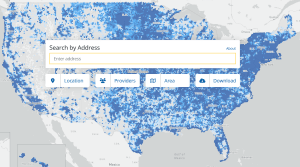
Who Will Still Need Broadband After BEAD?

A question I’ve been asked lately is what comes after BEAD. While BEAD will build good broadband networks in a lot of rural communities, it’s becoming clear that BEAD is not going to solve a lot of the rural broadband gap. I’ve identified categories of locations that will still need better broadband after BEAD.

BEAD Satellite Awards. I start with the premise that rural communities are not going to be happy when somebody officially tells them that the federal government is giving money to Starlink or Kuiper to solve their rural broadband gap. It’s likely that NTIA and the FCC will declare that satellite is good broadband so that they can declare that the rural broadband gap has been solved.

There are also natural limitations on the capabilities of satellite broadband. It can be difficult to deliver a satellite signal through heavy tree canopy. The signal can be blocked for customers living in the shadow of hills or mountains. There are a lot of questions about the maximum number of customers that can be served simultaneously in a given geography. But the real ongoing question will be if people and local politicians will accept satellite broadband when neighboring counties have fiber in rural places. There is also a big question of affordability.

I predict there will be a growing outcry from people from areas that got satellite from BEAD who will not accept satellite as the permanent solution.

Defaults. There will continue to be defaults for existing broadband grant programs. This year saw significant RDOF defaults from Charter and CenturyLink. There will be defaults on networks funded by ARPA grants, where funding ends at the end of 2026.

I expect BEAD defaults. When NTIA took the approach of forcing ISPs to accept less funding, many of those ISPs will realize in the future that they don’t have enough money to build the promised network.

Crappy Mapping. The biggest group of locations missed by BEAD will be due to poor FCC maps. The BEAD map challenge was a total joke. It was fairly easy for ISPs to get BEAD-eligible locations removed from the map, including many that should have stayed on. The map challenge made it practically impossible to add locations to the BEAD map where the FCC maps were in error. There are two major flaws in the FCC maps that will surface as people complain about still not having adequate broadband.

There are still numerous examples of locations that are not identified on the FCC maps. I recently talked to a cooperative in Appalachia that said there were neighboring areas where the FCC fabric missed 30% of the eligible locations. This is understandable because CostQuest relies on two primary sources of data on housing: local records and satellite images. There are many counties that still have poor records. Satellite images don’t do well in areas with total tree cover that hides roads and houses from the satellite imagery.

The bigger mapping issue is ISPs that have claimed speeds of 100/20 Mbps or faster in the FCC maps but can’t deliver that speed. FCC rules allow ISPs to report marketing speeds rather than an approximation of actual speeds, so such ISPs are probably not violating any FCC rules. But while fully knowing that marketing speeds are likely exaggerated, in the grant process, we pretend that the speeds reported in the FCC maps are gospel. When the RDOF subsidy program was announced, which was to provide a subsidy to locations where speeds were less than 25/3 Mbps, the large rural telcos flooded the FCC mapping process with claims that upgraded the claimed speeds of huge numbers of locations to exactly 25/3 Mbps broadband. The FCC rejected a lot of these claims that were made on the eve of the RDOF reverse auction. When BEAD rules dictated that grants could only be made to locations where broadband speeds were less than 100/20 Mbps, many rural ISPs scrambled to claim that they could deliver exactly 100/20 Mbps.

ISPs also often overstate coverage areas in the FCC maps. An ISP is only supposed to claim locations it can connect to within ten days after a request. There are many examples of WISPs in the FCC maps that draw perfect coverage circles around a tower that ignore topography and foliage. There are many other ISPs that claim service areas that are aspirational rather than real.

The bottom line is that we will still be a long way from being able to declare the job done after the BEAD awards. To be fair, BEAD, ReConnect, ARPA, and other grants have made some huge dents in the rural broadband gap. But the day will come when the millions of people who have been left behind will make themselves heard.

Cox Sues Rhode Island

In news that probably makes all State Broadband Offices nervous, Cox Communications has sued the Rhode Island Commerce Commission – which is the group that is heading up the BEAD grant effort. This raises the uncomfortable position that ISPs who feel shorted in the BEAD process could sue Broadband Offices as a way to be heard.

What’s particularly uncomfortable about the Rhode Island lawsuit is that the issues at the heart of the complaint involves the broadband maps used for BEAD grants. I doubt that any Broadband Office is comfortable with their BEAD maps. These maps derive from the FCC broadband maps, and each state modifies the maps through a BEAD map challenge process. Every time I’ve sat with an ISP or a county government and looked at the maps at the household level that there are still many aspects of the maps that are disturbing. The maps include eligible BEAD locations where there are no buildings, multiple BEAD locations where there is only one building or buildings that don’t have an associated BEAD location. The degree to which the maps are off differs from neighborhood to neighborhood. Of more concern and germane to this lawsuit are the broadband speeds claimed at every location – many speeds are clearly fictional and come from the FCC rule that allows ISPs to report ‘marketing’ speeds on the maps rather than some approximation of actual speeds.

The Cox challenge says the State is trying to award BEAD dollars to affluent parts of the state that don’t need broadband while missing areas that could use the grant help. There are already quotes in the press from the State complaining that that Cox didn’t participate in the BEAD data gathering or map challenge process.

Cox goes on to accuse the State of using a map challenge process that is impossible to follow. The suggestions on how to conduct a BEAD challenge came from the NTIA, and the rules are hard to meet. To provide or disprove having broadband at a location requires conducting multiple speed tests at different times of the day – something that is hard to convince a resident to do. The tests have to be conducted during a short time frame during a map challenge process. Cox gave the example of how impossible it would be for them to gather the needed speed tests from their own customers.

I heard the same complaint from local governments that tried to meet the speed challenge rules but couldn’t. A local government doesn’t know who subscribes to each ISP, and before even thinking of mounting a map challenge against a specific ISP they had to somehow find customers of that ISP willing to take the challenge.

I don’t know enough about the Rhode Island situation to have an opinion. What is troublesome about the lawsuit is that it’s bound to put the BEAD grant process in the State on hold. A judge is unlikely to let the State move forward with the BEAD grant, since doing so would be essentially siding with the State without considering Cox’s side of the story.

There are ISPs all over the country who are unhappy with the BEAD maps and the state BEAD map challenges. Any one of them could sue if a State rules against them in the map challenge process.

The threat of lawsuits goes way beyond just the mapping issues. It’s not impossible to foresee somebody suing State Broadband Offices over other issues. For example, some states are forcing BEAD winners to offer low rates – something that specifically prohibited in the IIJA legislation. There are states that have taken positions against using technologies other than fiber. There are states that are trying to require an ISP to serve entire county to qualify for a grant. Any one of these decisions disadvantages somebody and could lead to suits.

Any lawsuits against a State Broadband Office will mean an interminable delay. For example, even if Rhode Island concedes that the map challenge rules were unfair, it would probably have to open the map challenge again using a new set of rules.

The New FCC Maps

Mike Conlow was amazingly quick as usual and assembled a quick comparison of the new fourth version of the FCC broadband map to the previous third version. The new map reflects data as of December 2023.

The big change since the third version of the map is a big decrease in unserved and underserved locations. Mike’s count shows that total unserved and underserved locations on the map are now 8.8 million, down from 10.1 million. If true, this is a huge change in the rural broadband landscape.

There are a lot of factors that could impact a change of this magnitude. Before discussing these issues, here are the net changes between the third and fourth FCC broadband maps:

  • Total passings increased by 388,222.
  • Served passings increased by 1,644,756.
  • Underserved passings (25/3 Mbps to 100/10 Mbps) decreased by 157,132.
  • Unserved passings (under 25/3 Mbps) decreased by 1,099,402.

The change varies widely by state. For example, Nevada and North Dakota show over a 40%  drop in unserved locations, while nine states saw a drop of unserved locations under 5%. Arizona saw an increase of 8,925 unserved locations. The biggest drops in unserved locations were in Texas (-143,669), Missouri (-59,576), Michigan (-59,384), and California (-58,957).

The big question that must be asked is if these changes make any sense. Let’s start with a list of reasons why passings would change between the third to the fourth FCC maps.

Total passings should increase to reflect new homes being built. I’ve always wondered how CostQwest (the keeper of the FCC mapping fabric) is able to keep up with new home construction by address.

Total passings for a state can also increase or decrease due to corrections in the mapping fabric. In my own investigations, I’ve encountered a lot of homes that are not in the mapping fabric, locations in the fabric where there is no real-world building, and locations like barns that are not an addressable broadband location. I would hope that CostQuest is fixing these over time as they find better data sources. Changes can also come from individual challenges to the FCC maps for folks who complain their home isn’t listed in the fabric.

The biggest change to unserved and underserved passings probably comes directly from ISPs that have changed the way they are reporting in the FCC map. There are a number of reasons why an ISP might change its FCC reporting.

  • An ISP might have built new infrastructure and is properly reporting locations that now have a new source of broadband. New broadband construction might have been funded by state and local grants, RDOF, ReConnect, or other sources. Some ISPs are self-funding broadband expansion.
  • An ISP might have upgraded technology. A WISP might have upgraded radios and speeds. A cable company might have upgraded from DOCSIS 2.0 or 3.0
  • ISPs might have arbitrarily reported faster speeds. In looking at broadband mapping data in different places around the country, I’ve encountered a suspiciously large number of places where an ISP claims exactly 100/20 Mbps capability. That’s a speed that categorizes a location as served and makes it ineligible for BEAD grants and many other grants. I’ve seen the 100/20 Mbps speed claimed for DSL, fixed wireless, and cellular fixed wireless.

Recall that the FCC mapping rules only require ISPs to report marketing broadband speeds. If an ISP markets to customers with speeds ‘up to 100/20 Mbps’ it is not breaking FCC rules to make that claim in the maps – even if it only delivers 30/5 Mbps to a location. This FCC rule to allow marketing speeds instead of some approximation of actual speeds has made a travesty out of the maps.

Is it believable that 1.3 million fewer unserved locations in the country got upgraded to faster technology in a six-month period? Almost by definition, most of the unserved and underserved locations are rural. While there is a lot of fiber construction underway due to broadband grants, it’s hard to picture that grants covered that many new rural locations during a six-month period. Consider the amount of investment that would have required. If the average cost per upgrade was $6,000, this would have meant completing $7.8 billion of construction in the second half of last year in rural areas. It’s hard to think even half of that was spent in a six month period.

That is not a believable number. It seems a lot more likely that ISPs are changing the areas they claim to cover and the speeds they are claiming to provide.

Seeing these big mapping swings while States are trying to launch the BEAD grants is one more sign that BEAD will be a mess. Some states have already gone through the early stages of the BEAD map challenge, and these new changes will not have been reviewed or challenged by anybody. It seems more likely with every big mapping swing that more places will fall through the crack and that deserving locations will get skipped by BEAD.

Gaming the BEAD Maps

From all over the country, I’m hearing stories about ISPs who are gaming the FCC broadband maps in order to block area from being eligible for the BEAD grants. It’s relatively easy for an ISP to do this. All that’s needed is to declare the capability to deliver a speed of 100/20 Mbps in the FCC maps.

ISPs can largely do this with impunity since there is nothing wrong with them doing this. The archaic FCC rules allow ISPs to claim ‘up-to’ marketing speeds in the maps, and ISPs can self-determine the speed they want to declare.

A lot of ISPs decided to start claiming 100/20 Mbps capabilities in the last update to the FCC maps. This is being done across technologies. We’ve suddenly found rural DSL claimed at speeds of 100/20 Mbps and faster. Older DOCSIS 3.0 cable networks that previously declared upload speeds of 8 or 10 Mbps are suddenly in the FCC maps with 20 Mbps upload speeds. Some WISPs and FWA cellular carriers are claiming speeds of 100/20 Mbps across a large geographic footprint that doesn’t match the capabilities from its tower locations.

It’s not hard to understand the motivation for this. We’ve seen this before. Just before the FCC was to announce the eligible areas for the RDOF reverse auction, CenturyLink and Frontier declared that tens of thousands of Census blocks suddenly had the capability to deliver speeds of 25/3 Mbps. This was the speed in the FCC maps that would have made these areas ineligible for the RDOF auction. The FCC rightfully rejected these last-minute claims. But if the telcos had been less greedy and had declared a smaller number of Census blocks, they may well have gotten away with the deception. The motivation of these telcos was obvious – they didn’t want anybody else funded to bring broadband to their monopoly service territories, even though they were not delivering decent broadband.

The motivation to do this today is identical. When an ISP declares 100/20 Mbps speed capability, the area is removed from BEAD grant eligibility. The ISP operating in that area will have squelched a new competitor from entering the market using BEAD grants.

The ISPs aren’t finished with this effort. I know several communities where the cable company recently knocked on the door at City Hall to say they are going to upgrade the cable networks this year. These communities are expecting that the cable companies will try to kill BEAD eligibility by declaring the upgrades in the upcoming BEAD map challenges being done in each state.

The NTIA’s and the FCC’s response to this issue is that it is the responsibility of communities to police this issue and to engage in the upcoming state BEAD mapping challenges. I can barely talk about that position without sputtering in anger. Most counties are not equipped to understand the real speeds that are available from an ISP. From my own informal survey, I don’t think that even 10% of counties are considering a map challenge.

But even communities willing to tackle a map challenge will find an incredibly difficult time. First, many states only have a 30-day long map challenge process, and some of the challenges are already underway, with many more challenges to start very soon. Communities have to somehow convince customers of the suspect ISPs to take a speed test multiple times a day in a specific manner. That is hard to do under any circumstances, but particularly hard to do considering the short time frame and specificity of the challenge process.

Consider a real-life example of the difficulty of doing this. I know a county where a WISP claims 100/20 Mbps speed for over five hundred homes in a corner of the county. The county purchased trailing 12-months of Ookla speed test data, and there was only one speed test for this ISP in that area in the last year. If the State Broadband Office won’t accept that as proof for a valid challenge, the County can’t convince nonexistent customers to take a speed test.

This feels like another example of the NTIA ‘protecting the public’ by requiring a lot of proof for a map challenge. The fact is that the folks living in rural areas know the ISPS that work and don’t work. If a ISP appears with decent speeds in an area with no good broadband, word of mouth spreads quickly and a lot of people try the ISP. If a new ISP gains almost no customers, they are either making bogus claims of speed capabilities or they have prices that nobody can afford. Market success should be one of the criteria for a map challenge, and States should invalidate claims by any ISP who have only a sprinkling of customers in an area from blocking BEAD grants. Unfortunately, the FCC does not gather actual customer data in the same detail as the FCC maps – they only gather the speeds claimed by ISPs and the supposed capability to connect customers within 10 days.

The bottom line of all of this is that map manipulation is going to mean that a lot of areas will be excluded from the BEAD grants. Counties are ill-equipped to do the map challenges, and even motivated counties will have a hard time mounting a successful map challenge.

I expect my blogs in a few years will be full of stories of the neighborhoods that got left behind by BEAD and which still won’t have an ISP option with decent speeds. I’m predicting this will be millions of homes. Unfortunately, those homes will be scattered, and it will not be enough homes to drive another big grant program. I fear these folks will be left behind, served only by the ISP that exaggerated the speeds in the FCC map. In the case of the FCC maps, it seems that cheating pays.

Will Small ISPs Pursue BEAD?

In a recent article in FierceTelecom, U.S. Commerce Secretary Gina Raimondo was quoted as urging small ISPs to participate in the upcoming BEAD grants. She was quoted in the article in a speech made to small ISPs saying, “We want you to apply. We need you to apply. We will work with you and hold your hand so that you can apply. The message is: Prepare to compete and win. You can win.” She went on to say that small ISPs are the only ones who will likely be interested in serving some of the most remote places in the country.

I was honestly floored by these quotes. I’ve been working with broadband grant programs for decades, and the requirements for BEAD are massively over the top compared to other broadband grant programs. Raimondo is quoted as saying that the grant requirements have been crafted to “protect taxpayers.” The first day I read the legislation I knew that small ISPs would have huge problems making these grants work.

I’ve been hoping that State Broadband Offices would soften the harsh requirements that were suggested or mandated by NTIA. Unfortunately, most State Broadband Offices did just the opposite and doubled down and made it even harder to justify pursuing a BEAD grant. As an example, the legislation offered that BEAD grants could fund as much as 75% of the cost of building a rural project. However, most state grant scoring rules are pushing that number a lot lower. There are states that only give worthwhile grant points to somebody taking a 35% or 40% grant. It’s not hard to understand the reason for this. A lot this comes from pressure from the NTIA to make sure that the BEAD money can be spread around enough to serve all unserved locations. But all of the policy folks don’t seem to understand the basic financial fundamentals of serving broadband in rural areas. This one issue alone is making it impossible for many ISPs to even contemplate a BEAD grant.

But it doesn’t end there. The requirement to have an irrevocable letter of credit that feels like punishment to small ISPs. I have one client that would struggle to somehow come up with $3 million needed for the BEAD matching requirement. The letter of credit adds over $1 million in additional investment for this small ISP – and that breaks the financial model. The folks who made this requirement don’t seem to realize that a lot of small ISPs could never qualify for a letter of credit of this magnitude.

The most expensive requirement might be the requirement to pay prevailing wages that are being required by many states. In all of the business plans we’ve examined, this requirement increases the cost of building a network by 15% to 20% (which then also inflates the matching and the letter of credit).

I understand the federal goal of the NTIA to protect the public, but are they really protecting the public when the grant rules favor huge companies over small ones? It was clear from the first day of the process that NTIA is more worried about not having any BEAD failures than it is about having wide participation by ISPs – you can’t have both. The funny thing is that the three items listed above have added so much cost to building a BEAD-funded network that the chance of an ISP failing is far higher than it would have been without these requirements. Networks that cost too much to build are going to be at risk in future years when ISPs realize that it was a mistake to take the grants.

In addition to the high costs that come from the NTIA being super-cautious, the paperwork process for reporting on the grants is also way over-the-top. A lot of ISPs who take this money are going to regret it when they see the volume and frequency of reports that are going to be due for years after taking the money.

On top of all of this, the grant maps are a mess in many places due to the decision to allow licensed fixed wireless ISPs to claim a monopoly for rural locations simply by reporting a speed of 100/20 Mbps to the FCC. It’s virtually impossible to dispute this kind of claim in areas where the WISPs don’t have many active customers. The FCC BEAD map in many rural areas is a jumbled mix of served, underserved, and unserved households in the same rural neighborhoods. It’s almost impossible to make a workable business plan out of the mess that has been created by the FCC maps along with the residual mess created by RDOF.

There are going to be small ISPs who will brave BEAD and win grants. But a lot of ISPs cannot tackle BEAD even if they wanted to. Their balance sheets are not iron-clad enough, and they don’t have the borrowing power for the matching and letter of credit. Many can’t find a coherent service area due to the mess created by the maps.

I had to laugh at the “we will hold your hand” quote. Is the NTIA going to go to the bank with a small ISP to convince the banker that they should take a chance on lending a lot of money to a small company? There is only one way that the NTIA could increase participation in BEAD – and it’s something that other grant programs have done. If NTIA wants small company participation, it could give State Broadband Offices the ability to waive the harshest rules for smaller ISPs. I’m pretty certain that is not being discussed.

One More Mapping Challenge

There is still one more upcoming map challenge to try to fix errors in broadband maps for purposes of the upcoming BEAD grants.

The NTIA is requiring state broadband offices to have one more mapping challenge at the state level before the state can issue broadband grants. The NTIA issued a sample template for a state challenge process, but each state is allowed to develop its own challenge process. States are not required to wait for an update in the FCC mapping system before using any updated information when awarding grants.

The NTIA suggests that challenges can be made by ISPs who are considering asking for a BEAD grant. NTIA also suggests that states accept challenges from the public, and I assume that includes challenges from cities and counties as well.

This is the challenge that a lot of folks have been waiting for because there are still a lot of inaccuracies in the FCC maps. While some states did a vigorous review of the FCC maps and asked for map updates – many states did not. Some counties also put an effort into correcting the FCC maps – but many did not. This is the final chance to get locations declared as eligible for BEAD grants. I assume that States will not accept locations for BEAD grants that are not in the corrected maps.

This challenge is also the one that folks have been waiting for since the NTIA suggests that there can be a challenge against the claimed broadband speeds. A lot of the early map challenges had to do with getting the mapping fabric right – which is the database that is used to define the location of the homes and businesses in the country.

My consulting firm has been working with communities, and we are still seeing a lot of inaccurate information. In every county we have examined, we find ISPs claiming speeds of 100/20 Mbps or faster that are not supported by Ookla speed tests. We’re also finding coverage errors in the maps where ISPs are reporting homes as covered that are not. A lot of the earlier challenges fixed coverage problems that were grossly incorrect, but it takes a lot more effort to find smaller pockets of ten or twenty homes that can’t buy good broadband but for which some ISP claims coverage.

Many of the problems in the FCC maps are directly due to the FCC rules for ISPs to report broadband for the maps. ISPs are allowed to claim marketing speeds for broadband instead of the actual speed delivered. There are far too many cases where the advertised marketing speed is much faster than what is being delivered. ISPs can also claim areas as covered by broadband where the ISP can supposedly provide broadband in ten working days. Finally, we often find ISPs claiming broadband coverage where an engineering field review doesn’t find any of the claimed technology.

The mapping is only an issue for BEAD because the IIJA legislation that created the BEAD grants insisted that FCC mapping must be used to allocate grants. I’m sure that language was inserted into the legislation at the insistence of the big ISP lobbyists to make sure that grant funds were not used to ‘overbuild’ existing broadband. At the time the IIJA legislation was passed, the FCC maps were atrocious. They have now been improved to the point where I would say they are now merely dreadful – but nobody believes the FCC maps are accurate. Most people only have to look around their immediate neighborhood on the FCC maps to find a few overstatements of coverage. My team has looked in great detail at perhaps a dozen counties and found a lot of mapping errors. I can’t even begin to think what that means on a national scale.

Unfortunately, most people in the country have no idea how this complicated BEAD process works. After the grants have been awarded, I expect we’ll start to hear from unserved homes that are not going to be covered by a BEAD grant. I believe this is going to be a lot more homes than anybody at the NTIA, the FCC, or state broadband offices wants to acknowledge.

Hopefully, the ISPs who want to file BEAD grants will take a shot at cleaning up the map errors now. That’s the only way to get grant funding for locations that are underserved but which don’t show that on the FCC maps. Everybody interested in doing this needs to pay attention to the state broadband office. States will first issue a plan to the FCC describing the way it will conduct the mapping challenge. These plans will likely have a 30-day opportunity for public comments. If you don’t like the map challenge rules, holler! Sometime later, states will hold the mapping challenge, and most will likely have a narrow time window to file challenges.

More Mapping Drama

As if the federal mapping process needed more drama, Senator Jacky Rosen (Dem-Nevada) and John Thune (Rep-South Dakota) have introduced bill S.1162 that would “ensure that broadband maps are accurate before funds are allocated under the Broadband Equity, Access, and Deployment Program based on those maps”.

If this law is enacted, the distribution of most of the BEAD grant funds to States would be delayed by at least six months, probably longer. The NTIA has already said that it intends to announce the allocation of the $42.5 billion in grants to the states on June 30. The funds are supposed to be allocated using the best count of unserved and underserved locations in each state on that date. Unserved locations are those that can’t buy broadband of at least 25/3 Mbps. Underserved locations are those unable to buy broadband with speeds of at least 100/20 Mbps.

To add to the story, FCC Commissioner Jessica Rosenworcel recently announced that the FCC has largely completed the broadband map updates. That announcement surprised the folks in the industry who have been working with the map data, since everybody I talk to is still seeing a lot of inaccuracies in the maps.

To the FCC’s credit, its vendor CostQuest has been processing thousands of individual challenges to the maps daily and has addressed 600 bulk challenges that have been filed by States, counties, and other local government entities. In making the announcement, Rosenworcel said that the new map has added over one million new locations to the broadband map – homes and businesses that were missed in the creation of the first version of the map last fall.

But the FCC map has two important components that must be correct for the overall maps to be correct. The first is the mapping fabric that is supposed to identify every location in the country that is a potential broadband customer. I view this as a nearly impossible task. The US Census spends many billions every ten years to identify the addresses of residents and businesses in the country. CostQuest tried to duplicate the same thing on a much smaller budget and with the time pressure of the maps being used to allocate these grants. It’s challenging to count potential broadband customers. I wrote a blog last year that outlined a few of the dozens of issues that must be addressed to get an accurate map. It’s hard to think that CostQuest somehow figured out all of these complicated questions in the last six months.

Even if the fabric is much improved, the more important issue is that the accuracy of the broadband map is reliant on two issues that are reported by ISPs – the coverage area where an ISP should be able to connect a new customer within ten days of a request, and the broadband speeds that are available to a home or business at each location.

ISPs are pretty much free to claim whatever they want. While there has been a lot of work done to challenge the fabric and the location of possible customers – it’s a lot harder to challenge the coverage claims of specific ISPs. A true challenge would require many millions of individual challenges about the broadband that is available at each home.

Just consider my own home. The national broadband map says there are ten ISPs available at my address. Several I’ve never heard of, and I’m willing to bet that at least a few of them can’t serve me – but since I’m already buying broadband from an ISP, I can’t think of any reason that would lead me to challenge the claims of the ISPs I’m not using. The FCC thinks that the challenge process will somehow fix the coverage issue – I can’t imagine that more than a tiny fraction of folks are ever going to care enough to go through the FCC map challenge process – or even know that the broadband map exists.

The FCC mapping has also not yet figured out how to come to grips with broadband coverage claimed by wireless ISPs. It’s not hard looking through the FCC data to find numerous WISPs that claim large coverage areas. In real life, the availability of a wireless connection is complicated. The FCC reporting is in the process of requiring wireless carriers to report using a ‘heat map’ that shows the strength of the wireless signal at various distances from each individual radio. But even these heat maps won’t tell the full story. WISPs are sometimes able to find ways to serve customers that are not within easy reach of a tower. But just like with cellphone coverage, there are usually plenty of dead zones around a radio that can’t be reached but that will still be claimed on a heat map – heat maps are nothing more than a rough approximation of actual coverage. It’s hard to imagine that wireless coverage areas will ever be fully accurate.

DSL coverage over telephone copper is equally impossible to map correctly, and there are still places where DSL is claimed but which can’t be served.

Broadband speeds are even harder to challenge. Under the FCC mapping rules, ISPs are allowed to claim marketing speeds. If an ISP markets broadband as capable of 100/20 Mbps, they can claim that speed on the broadband map. It doesn’t matter if the actual broadband delivered is only a fraction of that speed. There are so many factors that affect broadband speeds that the maps will never accurately depict the speeds folks can really buy. It’s amazingly disingenuous for the FCC to say the maps are accurate. The best we could ever hope for is that the maps will be better if, and only if ISPs scrupulously follow the reporting rules – but nobody thinks that is going to happen.

I understand the frustration of the Senators who are suggesting this legislation. But I also think that we’ll never get an accurate set of maps. Don’t forget that Congress created the requirement to use the maps to allocate the BEAD grant dollars. Grant funding could have been done in other ways that didn’t relay on the maps. I don’t think it’s going to make much difference if we delay six months, a year, or four years – the maps are going to remain consistently inconsistent.

Counting Broadband Locations

All of the discussion of the FCC maps lately made me start thinking about broadband connections. I realized that many of my clients are providing a lot of broadband connections that are not being considered by the FCC maps. That led me to think that the old definition of a broadband passing is quickly growing obsolete and that the FCC mapping effort is missing the way that America really uses broadband today.

Let me provide some real-life examples of broadband connections provided by my clients that are not being considered in the FCC mapping:

  • Broadband connections to farm irrigation systems.
  • Broadband to oil wells and mining locations.
  • Broadband to wind turbines and solar farms.
  • Fiber connections to small cell sites.
  • Broadband electric substations. I have several electric company clients that are in the process of extending broadband to a huge number of additional field assets like smart transformers and reclosers.
  • Broadband to water pumps and other assets that control water and sewer systems.
  • Broadband to grain elevators, corn dryers, and other locations associated with processing or storing crops.
  • I’m working with several clients who are extending broadband for smart-city applications like smart streetlights, smart parking, and smart traffic lights.
  • Broadband to smart billboards and smart road signs.
  • Broadband for train yards and train switching hubs.
  • There are many other examples, and this was just a quick list that came to mind.

The various locations described above have one thing in common. Most are locations that don’t have a 911 street address. As such, these locations are not being considered when trying to determine the national need for broadband.

A lot of these locations are rural in nature – places like grain elevators, mines, oil wells, irrigation systems, wind turbines, and others. In rural areas, these locations are a key part of the economy, and in many places are unserved or underserved.

We are putting a huge amount of national energy into counting the number of homes and businesses that have or don’t have broadband. In doing so, we have deliberately limited the definition of a business to a place with a brick-and-mortar building and a 911 address. But the locations above are often some of the most important parts of the local economy.

I’ve read predictions that say in a few decades there will be far more broadband connections to devices than to people, and that rings true to me. I look around at the multiple devices in my home that use WiFi, and it’s not hard to envision that over time we will connect more and more locations and devices to broadband.

After a decade of talking about the inadequate FCC broadband maps, we finally decided to throw money at the issue and devise new maps. But in the decade it took to move forward, we’ve developed multiple non-traditional uses for broadband, a trend that is likely to expand. If we are really trying to define our national need for broadband, we need to somehow make sure that the locations that drive the economy are connected to broadband. And the only way to do that is to count these locations and put them on the broadband map, so somebody tries to serve them. The current maps are doing a disservice by ignoring the huge number of these non-traditional broadband connections.

Hidden Unserved Locations

There is a mountain of complaints to be made about the new FCC maps. In some parts of the country there are a lot of missing rural locations, including entire subdivisions. Various ISPs have continued to exaggerate both coverage areas and broadband speeds. But even with all of the flaws there is a lot of interesting information in the new maps.

I live in Asheville, North Carolina. In the previous version of the FCC mapping the whole city and a lot of the surrounding areas were shown as having broadband available from Charter. There is also parts of the city that have fiber provided from AT&T. As you might imagine, the old maps didn’t tell the real story. The FCC mapping protocol showed an entire Census block covered by a given ISP that has even one customer in the Census block. It’s mostly this mapping rule that showed everybody here able to buy broadband from Charter.

The new maps are far more granular. If you search the map throughout the city you can find homes, businesses, and whole streets where Charter doesn’t claim to offer broadband. The AT&T coverage on the new maps shows how AT&T typically builds small fiber networks that cover only a few blocks in a given area.

Close analysis of the map shows what folks in the broadband world have always known, but were unable to prove, that the big cable companies and telcos don’t cover everybody. It is these unserved folks in the middle of cities that I call the hidden unserved locations. Such locations cannot buy the same broadband as nearby neighbors.

These little pockets came about for a variety of reasons. Some are costly to serve and the cable company decided not to reach them when the initial network was built. The cable company might not have been unable to obtain the needed rights-of-way for some reason. A house might be sitting inside of a park or other land that makes it complicated to pursue an easement. ISPs also don’t always automatically build to reach newly constructed homes, which can be a real shock to the new tenants.

In many of these cases where the cost to connect a drop is high, and an ISP often refuses to connect the location unless the customer pays for the cost of the connection. Everybody in the industry has heard the horror stories where an ISP quotes a cost of thousands, or even tens of thousands of dollars to make a connection, even inside of a city. Many homes and businesses in this situation cannot afford the big connection fee.

It’s not always the ISPs fault that the broadband isn’t available. It’s not unusual for the owners of privately-owned road not to give permission to an ISP or others to dig up the streets. There are apartment buildings where the owner decided not to allow a given ISP into the building. There are homes where the owner doesn’t want a connection and refuses to provide an easement.

In looking around Asheville I found a surprising number of such locations. I found individual homes or pockets of homes that are not claimed as served by Charter. But the real surprises came when looking at the outer portions of the city. There are parts of neighborhoods that have been bypassed for some reason, even though homes further outside of the city have service. It also looks like neighborhoods with large lots and long driveways have been selectively bypassed.

This version of the FCC maps likely still has a lot of reporting errors. Some of the homes shown as not being served might have a connection available, while some homes shown as having broadband might not be able to get it. Over time it’s hopeful that a lot of these local issues will be resolved as people use the FCC map challenge to fix the maps. But I think a lot of these situations are real. It’s not worth the effort yet with this first iteration of the maps to dig too deeply. But cities are going to be able at some point to make an inventory of locations that don’t have good broadband. At that point cities will be able to work to close the gap of the hidden unserved locations.

Get Ready for the Challenge Process

There is one interesting aspect of the BEAD grants that could impact any rural community that is hoping to find a broadband solution from the $42.5 billion BEAD grant process. The NTIA is allowing local governments to challenge the broadband maps that will be used to determine the areas that are eligible for the grants. This is something that communities should be getting ready for today.

Let me first explain the background to this challenge process. It’s a confusing and messy story. When Congress funded the new BEAD grants, one of the provisions was that States have to use the FCC maps as the basis for the broadband grants. This is a dreadful provision since the FCC maps have been so inaccurate in the past. Several states have done enough analysis to show that the current FCC maps mischaracterize millions of homes as having adequate broadband that doesn’t exist. This is almost entirely due to the fact that ISPs feed the data into the FCC maps with no review or challenge by the FCC. The FCC mapping rules say that an ISP can report ‘marketing speeds’, and many ISPs have used that ability to overstate the speeds of broadband. For example, there are millions of homes in the current FCC maps using DSL where the telcos claim speeds of 25 Mbps, but where actual speeds are almost always far slower than this. This overstatement of the existing capability means that customers would be categorized as underserved in the BEAD grants instead of unserved.

The FCC is scrambling to create a new set of broadband maps to be used for the BEAD grants. The latest I’ve heard is that the new maps might be ready by November. The new maps completely change the way that ISPs report the data – they now must draw polygons around customers rather than using Census blocks. But the new mapping rules didn’t make the change that matters the most – ISPs are still allowed to list marketing speeds instead of actual speeds.

I’m certain that the new maps are going to be a disaster, at least this first version that comes out this fall. First, many ISPs are going to stumble making the conversion to the new mapping system – it’s complicated and is not going to be easy to get right. But my real concern is that ISPs that want to gum up the grants can do so by overstating broadband speed capabilities, as they have done in the past.

We don’t have to look back very far into the past to see the big telcos try this. On the eve of the RDOF auction, CenturyLink and Frontier tried to increase the reported speeds for tens of thousands of Census blocks to above 25/3 Mbps – a change that would have kept those locations out of the RDOF auction. The FCC blocked these mass changes before the auction, but there is nothing to stop the ISPs from doing this again.

And now, there is a new group of ISPs with this same motivation. In the recent NOFO for the BEAD rants, the NTIA says that grants can’t be used to overbuild a fixed wireless ISP that uses licensed spectrum and provides broadband speeds of at least 100/20 Mbps. That ruling means that these ISPs are going to be highly motivated to declare that they are delivering 100/20 Mbps speeds even if they don’t in order to protect their service areas from BEAD grant eligibility. Many wireless ISPs have overstated broadband speeds in the past even more than big telcos, so it’s not hard to imagine some of them doing this.

The challenge process gives a community the chance to fight back if the new FCC maps show that their community is not eligible for the BEAD grants. Each state must allow for a challenge process where a unit of local government, a nonprofit organization, or an ISP can challenge the broadband maps. These challenges are made to the State, and not to the FCC. I’m hopeful that most states will be sympathetic to challenges that will bring faster broadband to places that need it. A State much submit every successful challenge to the NTIA for review – but I believe that the NTIA will want to get these grants done right.

How could a community mount a challenge? The best way to do this is with a mountain of speed test data that has been collected by address. We know that any individual speed test reading is not reliable proof of broadband speeds – there can be factors at a home, such as a poor WiFi router than can lower the measured speed. But speed tests taken in bulk are good proof. For example, if no speed test in a rural area hits the speeds claimed on the FCC maps, it’s fairly certain that the claimed speed is not being delivered.

I also think that gathering anecdotes and stories of the results of the poor broadband in the affected areas can be effective. If an ISP overstates broadband speeds in an area, stories from folks who tell how they can’t work from home or how their kids can’t do homework over the broadband connections can help to bolster the fact that the broadband speeds are being exaggerated.

States will not be asking for these challenges until sometime after the new year, so there is plenty of time this year to start gathering the evidence. It may turn out you won’t need a challenge if the ISPs in your area report existing speeds honestly. But you need to be prepared for the situation where the FCC maps will deny broadband funding for your area. It will be a disaster for a community if they are unfairly denied grant funding because of a dispute about the FCC maps. It’s happened many times before – but communities need to make sure they don’t miss out on this giant round of funding.