
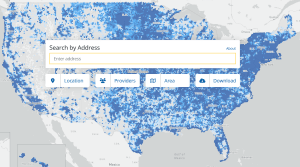
 Congress created the new BDC maps with passage of the Broadband Deployment Accuracy and Technological Availability Act (the Broadband DATA Act). This created the requirement for the new mapping system that replaced the old system of reporting map called the 477 process.
One of the requirements of the Broadband DATA Act is that ISPs have to engage a professional engineer to certify that the data submitted to the FCC is accurate. There was an instant industry outcry, particularly among smaller ISPs, who said this added additional cost to the process. Many small ISPs said they would have a problem even finding a professional engineer since they designed and built their own networks and didn’t use engineers. The FCC agreed and issued a waiver for the engineering requirement for data due to the FCC on June 2022, December 2022, and June 2023.
The FCC issued a second waiver a few years later than covered the December 2023, June 2024, and December 2024 FCC filings. That waiver has now expired, and if the FCC doesn’t issue another waiver this requirement will go into effect with the filing for the June 2025 data.
The issue might come to a head this year, because the FCC can’t continually make waivers for a requirement created by Congress. By this summer, the BEAD grant process will largely be over in terms of mapping, and there is no longer much incentive for the FCC to continue the waiver. The FCC has softened the original requirement a bit, in that a company officer can now certify the FCC data as long as they are an engineer.
Congress clearly intended the requirement for professional engineer signoff. There has been continuous criticism that the FCC broadband maps are not accurate – and this is still true. ISPs claim coverage areas and speeds that they cannot deliver. An ISP is not going to find a professional engineer who will sign off on exaggerated claims since that would put their license at risk.
Small ISPs are right about the cost of this. I know a few who were quoted a cost of $10,000 for the PE stamp of the maps back when it looked like this requirement was going to go into effect. It’s not hard to envision even higher fees for some ISPs. I’m picturing a small rural WISP that has a few customers served from dozen of radios on silos and grain elevators. A PE would want to verify the coverage from each radio.
I’m not advocating for the PE signoff, but it would eliminate a lot of the nonsense in the FCC maps. There are far too many places where I see a WISP claiming symmetrical 6 – 8 mile circles around each tower, or rural DSL speeds claimed at 100 Mbps. In cities there are often a dozen ISPs claiming to be able to serve a neighborhood, with much of the coverage being imaginary. I think requiring engineering approval would clean up a lot of the misreporting.
This would only impact small ISPs because big ISPs mostly have engineers on staff. I recall when this requirement first arose, many of the engineers I know said they were not interested in taking on clients strictly for the purpose of the FCC maps. The risk of certifying false records outweighs the monetary gain. I have to think this is still true, and ISPs with no engineering relationship might not be able to find an engineer to help them.
I’m sure the trade associations that represent small ISPs are already gearing up to ask for another waiver. I wonder, though, if, at some point, the waiver won’t come.