New Rules for FCC Maps

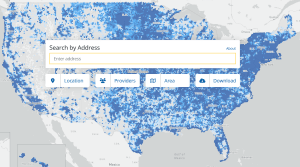
At the end of April, the FCC released a Report and Order and a Notice of Proposed Rulemaking related to its broadband mapping processes. There are no earth-shattering changes in the order and this is part of the ongoing process of finetuning the FCC broadband maps.

The following are the changes that were ordered:

  • The FCC ordered that the definition of broadband be the same for the BDC map collection process as the Form 477 process where ISPs and carriers report customers. Currently, there are some types of customers included in the BDC maps that are not included on the Form 477.
  • The FCC is eliminating the process, where an ISP or carrier must be notified of challenges to the map fabric and given a chance to respond. The map fabric is the database of potential customer locations. Eliminating this extra step will hopefully speed up the process of implementing challenges to the fabric.
  • The FCC shifted the responsibility to the FCC staff (or its mapping vendor) to remove demonstrably bad data from the BDC maps rather than requiring the ISP or carrier to make changes.

In the Notice of Proposed Rulemaking, the FCC asked for feedback from the industry on a number of questions:

  • The FCC asks about changing the map restoration This is the process where ISPs or carriers can reenter data into the FCC maps that was removed due to map challenges or other FCC actions. We now know that a lot of changes were made to the maps as a result of the BEAD map challenges, and the FCC is asking if there can be a simpler process for ISPs or carriers to fix the maps.
  • The FCC asks if it should eliminate the requirement for ISPs to report “grandfathered” broadband coverage, meaning locations where maximum download speeds are slower than 25 Mbps.
  • The FCC also asks about eliminating the requirement to report 3G cellular coverage.
  • The FCC asks if the rules for fixed wireless reporting should be changed when reporting the ‘buffer size’, which is the maximum distance an ISP wants to claim to be able to provide service from a tower site.
  • The FCC asks if it should change or relax the assumption that fixed wireless providers should assume the height of a customer receiver at a height no higher than 7 meters.
  • The FCC currently requires BDC providers to retain all of the backup for reported data for three years, and it asks if that should be something different.
  • The FCC is seeking comments on changes that would speed up and streamline the map challenge process. There are questions related to individual map challenges, bulk challenges, and crowdsourced challenges.
  • The FCC asks if there are needed changes to the mobile verification and audit processes.
  • Finally, the FCC asks if certain kinds of data should automatically be considered to be confidential, rather than requiring ISPs and carriers to seek confidentiality with each data submittal.
The FCC 2024 Broadband Report

The FCC recently released its Internet Access Services report for December 31, 2024. The report is generated to provide a mandated update to Congress annually on the state of broadband. The data for the report mostly comes from broadband data that ISPs report to the FCC twice each year using the BDC reporting system, with some overlay with Census data.

I’ve always hoped this report would provide useful information, but it’s challenging to glean any truly valuable information from the report. There are a lot of reasons that combine to make most of the report unusable.

  • There is still a lot of inconsistency in the way the FCC broadband map defines serviceable locations. There are numerous examples where the FCC maps include locations that don’t exist while excluding valid locations. There is still no consensus on how to count vacant homes, vacation cabins, apartments built in basements and garages, etc. The FCC broadband map concentrates on ‘mass-market’ residential and business broadband locations. This leads to inconsistent counting of large businesses, while most anchor institutions are not included in the map.
  • ISPs report broadband coverage to the FCC, which is supposed to mean locations an ISP is connected to or that it can connect within 10 business days of a customer request for service. We’ve seen many cases where ISPs exaggerate claimed service areas.
  • The real issue with the claimed coverage is that ISPs also claim the maximum broadband speed available at each location. FCC rules allow ISPs to claim marketing speeds, which may be very different than actual speeds. For example, it’s very common for ISPs to claim 100/20 Mbps coverage but deliver something much slower for download or upload speeds. This means the FCC report is nothing more than a summary of the marketing speeds claimed by ISPs.
  • The FCC makes no attempt to layer on known changes to the data. For example, the FCC maintains maps of federal broadband grant awards that are supposed to be built in coming years. The report would be a lot more useful for measuring broadband improvements if there were tables summarizing these known changes.
  • Finally, I’m doubtful, in today’s dynamic market, of the usefulness of any data captured at a snap shot in time. The Fiber Broadband Association claims there were 11.1 million fiber passings constructed during 2025 that are not reflected in the report. There have also been a lot of technology upgrades from cable companies, WISPs, and FWA providers. These changes all mean that the broadband landscape is significantly different just one year after the date of this report.

The report is full of charts and tables that sound like they should be useful, until you look at each of them in light of the above issues. For example, every table that is based on broadband speed is highly questionable due to ISPs that self-report marketing speeds.

But even many of the tables and graphs that don’t refer to speeds are puzzling, or report nothing useful.

  • Figure 4 purports to show broadband customers at the end of 2024 by technology. It shows 57.3% on cable, 26.7% on fiber, 6.6% on DSL, 7.3 % on fixed wireless, and 2% on satellite. However, even this simple table is troublesome. The three big FWA cellular providers claimed 11.6 million customers at the end of 2024, and it looks like these customers are not included in any of the categories.
  • Figure 9 shows the locations in each state with various speeds. Are there really 9% of locations in West Virginia and 5% of locations in Mississippi that can’t get a broadband speed of at least 0.2 Mbps? There are a lot of tables that analyze speeds over and under 200 kbps (this really is kilobits, which is four times faster than dial-up), which must be an obsolete Congressional reporting category.
  • Figure 17 shows all fixed connections with speeds over 200 kbps. The table combines cellphones and broadband in the same table, which demonstrates that only 14% of broadband connections are from cable broadband.
  • Figures 20 through 31 show the trend over time of the number of connections at various speeds. Because of the use of marketing speeds, the quantities are likely far off, but the trends are interesting. These figures clearly ignore FWA cellular broadband.
  • There are a lot of charts and tables about cellular speeds, which are completely worthless since most cell companies report 5G speeds to the FCC maps of either 7/1 Mbps or 35/3 Mbps, in a world where actual speeds can be hundreds of Mbps.
  • Figure 41 is interesting and shows the number of ISPs that report the use of various technologies over time. The trends are interesting but have no context. For example, how much of the drop of the number of cable ISPs is due to companies that folded versus those that were absorbed into a larger cable provider?

FCC Mapping and Engineers

Congress created the new BDC maps with passage of the Broadband Deployment Accuracy and Technological Availability Act (the Broadband DATA Act). This created the requirement for the new mapping system that replaced the old system of reporting map called the 477 process.

One of the requirements of the Broadband DATA Act is that ISPs have to engage a professional engineer to certify that the data submitted to the FCC is accurate. There was an instant industry outcry, particularly among smaller ISPs, who said this added additional cost to the process. Many small ISPs said they would have a problem even finding a professional engineer since they designed and built their own networks and didn’t use engineers. The FCC agreed and issued a waiver for the engineering requirement for data due to the FCC on June 2022, December 2022, and June 2023.

The FCC issued a second waiver a few years later than covered the December 2023, June 2024, and December 2024 FCC filings. That waiver has now expired, and if the FCC doesn’t issue another waiver this requirement will go into effect with the filing for the June 2025 data.

The issue might come to a head this year, because the FCC can’t continually make waivers for a requirement created by Congress. By this summer, the BEAD grant process will largely be over in terms of mapping, and there is no longer much incentive for the FCC to continue the waiver. The FCC has softened the original requirement a bit, in that a company officer can now certify the FCC data as long as they are an engineer.

Congress clearly intended the requirement for professional engineer signoff. There has been continuous criticism that the FCC broadband maps are not accurate – and this is still true. ISPs claim coverage areas and speeds that they cannot deliver. An ISP is not going to find a professional engineer who will sign off on exaggerated claims since that would put their license at risk.

Small ISPs are right about the cost of this. I know a few who were quoted a cost of $10,000 for the PE stamp of the maps back when it looked like this requirement was going to go into effect. It’s not hard to envision even higher fees for some ISPs. I’m picturing a small rural WISP that has a few customers served from dozen of radios on silos and grain elevators. A PE would want to verify the coverage from each radio.

I’m not advocating for the PE signoff, but it would eliminate a lot of the nonsense in the FCC maps. There are far too many places where I see a WISP claiming symmetrical 6 – 8 mile circles around each tower, or rural DSL speeds claimed at 100 Mbps. In cities there are often a dozen ISPs claiming to be able to serve a neighborhood, with much of the coverage being imaginary. I think requiring engineering approval would clean up a lot of the misreporting.

This would only impact small ISPs because big ISPs mostly have engineers on staff. I recall when this requirement first arose, many of the engineers I know said they were not interested in taking on clients strictly for the purpose of the FCC maps. The risk of certifying false records outweighs the monetary gain. I have to think this is still true, and ISPs with no engineering relationship might not be able to find an engineer to help them.

I’m sure the trade associations that represent small ISPs are already gearing up to ask for another waiver. I wonder, though, if, at some point, the waiver won’t come.

Penalties for FCC Mapping

On August 22, the FCC threatened significant fines for eleven ISPs that failed to participate in the FCC broadband data collection and mapping process. All eleven ISPs have now missed three biannual filings to the FCC which describes where they provide service, the technologies they deploy, and the speeds they offer to customers. All ISPs are required to provide data to the FCC Broadband Data Collection (BDC) system twice per year to document coverage as of June 30 and December 31.

These ISPs have been issued several warnings from the FCC to begin complying with the broadband mapping rules. In this recent order, the FCC gave the ISPs 30 days to respond to the order. Within the 30 days, each ISP must either file a written statement to the FCC, hold a teleconference, or meet live with the closest FCC Field Office. The FCC said that failure to meet that deadline could result in a fine not to exceed $24,496 per day or a maximum fine of $183,718. Each ISP was ordered to report data retroactively for the December 2023 data collection process.

The ISPs include: A.C.T.S. LLC, of Moweaqua, IL; City Wireless of Star City, AR; Community Cable and Broadband of Brent, AL; Crazy Communications of Lorraine, KS; FiberSpark of Ithaca, NY; Gila Broadband of Concho, AZ; Internet Services of Big Rapids, MI; Simple Fiber Communications of Bedford, TX; Telecast Communications of Upton, KY; and WIFAST of Jacksonville, FL

The FCC had warned all ISPs when it first created the new BDC reporting system that there would be significant fines for non-compliance.

This is not the first set of fines related to broadband reporting to the FCC. In March, the FCC fined Jefferson County Cable of Toronto, Illinois $10,000 for making false claims about providing fiber service that didn’t exist. The company admitted that it made the false filing to prevent another ISP from winning grant funding for the area.

For folks who work with broadband maps every day, the fines I’d really like to see are for ISPs that distort the reported broadband speeds that are available to customers. In this period of broadband grants, an ISP that claims it can deliver a speed of 100/20 Mbps effectively stops other ISPs from receiving grant funding, the same as was done by Jefferson County Cable.

But we’ll never see fines for misstated speeds since the FCC gave permission to ISPs to do so. The BDC map rules allow ISPs to claim marketing speeds rather than some approximation of actual speeds.

Of course, the whole idea of setting a specific speed that defines broadband versus non-broadband makes the speed an attractive target for exaggerated speed claims. What degree of speed exaggeration would an ISP need to make to violate the intentions of the FCC reporting rules? If an ISP is delivering maximum speeds of 75 Mbps, is it wrong for it to claim 100/20 Mbps and, in doing so, block grant funding from others to improve broadband? What if the actual speeds being delivered are 50 Mbps, or 25 Mbps, or 10 Mbps? Is there degree of speed exaggeration that would make the FCC consider a fine for over-reporting?