
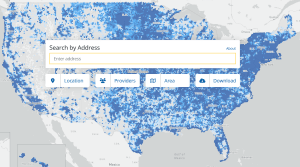
 Pew Trusts recently published a detailed article that demonstrates the difficulty of analyzing and understanding broadband deployment using existing federal broadband data. Anybody who follows discussions about broadband mapping has heard stories of how broadband mapping data is often still inadequate, but the Pew observation goes far beyond the mapping data.
Pew reports that broadband researchers have identified several important problems that make it difficult to analyze and understand broadband data.
- Federal data on broadband access, adoption, and household characteristics is often reported by county, ZIP code, or census tract, rather than by household. This lack of standardization of collecting and reporting broadband data makes it impossible to combine different data sets for evaluation.
- Federal data relies heavily on information provided by internet service providers, which means there are concerns about bias and lack of transparency in the data.
- Different data sources are inconsistent when defining the data being reported. For example, some sources of federal broadband data don’t denote the broadband technology, making it difficult to correlate network performance and household use of the internet.
- Current federal data makes it difficult to determine the availability of affordable broadband connections or even how to define affordability. Federal data collection rarely combines broadband prices with other data
The Pew report demonstrates the challenge of understanding federal broadband data by listing fifteen different federal sources of information related to broadband. The list includes the sources most people know about, such as the FCC BDC broadband maps. But there is also broadband data available from NTIA, USAC, USDA, and the U.S. Census.
Pew highlights how the problems with data has likely led to decision-makers making choices with funding programs that misallocated funding. One recent example of this is the BEAD grants, where over the course of a few years, the map of eligible BEAD locations changed drastically. Nobody believes that the final BEAD map is an accurate depiction of homes without good broadband.
Another example of mismatched data was when valid applications for Reconnect grants were rejected when grant applicants defined grant serving areas using specific households, while USDA evaluated the proposed serving areas using hexagons. If any hexagons overlapped a household that had broadband, entire grant applications were invalidated.
Probably the biggest misuse of federal data came from the FCC when it used FCC mapping data provided by ISPs, which everybody in the industry understood to be inadequate, to define the Census blocks that were eligible for RDOF. The resulting Swiss cheese maps of eligible areas are still plaguing all other efforts to close the broadband availability gap.
There is no doubt that incomplete information makes it difficult for lawmakers and regulators to understand the impacts of proposed policies and for government entities to enforce grant recipients’ program requirements. The shortcomings of good federal data has led some states to create their own baseline measurements to try to understand broadband impacts on economic opportunities, access to health care services, education, and workforce development.
The Pew article suggests that fixing some key issues will lead to a more understandable broadband landscape. However, this would require somebody in the federal government to mandate that any data gathering and reporting of broadband data adhere to defined parameters that would make the various data sets compatible. While trying not to sound too pessimistic, this doesn’t seem likely.