
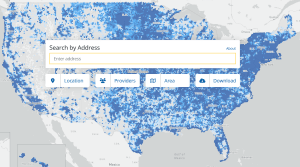
 Congress created the new BDC maps with passage of the Broadband Deployment Accuracy and Technological Availability Act (the Broadband DATA Act). This created the requirement for the new mapping system that replaced the old system of reporting map called the 477 process.
One of the requirements of the Broadband DATA Act is that ISPs have to engage a professional engineer to certify that the data submitted to the FCC is accurate. There was an instant industry outcry, particularly among smaller ISPs, who said this added additional cost to the process. Many small ISPs said they would have a problem even finding a professional engineer since they designed and built their own networks and didn’t use engineers. The FCC agreed and issued a waiver for the engineering requirement for data due to the FCC on June 2022, December 2022, and June 2023.
The FCC issued a second waiver a few years later than covered the December 2023, June 2024, and December 2024 FCC filings. That waiver has now expired, and if the FCC doesn’t issue another waiver this requirement will go into effect with the filing for the June 2025 data.
The issue might come to a head this year, because the FCC can’t continually make waivers for a requirement created by Congress. By this summer, the BEAD grant process will largely be over in terms of mapping, and there is no longer much incentive for the FCC to continue the waiver. The FCC has softened the original requirement a bit, in that a company officer can now certify the FCC data as long as they are an engineer.
Congress clearly intended the requirement for professional engineer signoff. There has been continuous criticism that the FCC broadband maps are not accurate – and this is still true. ISPs claim coverage areas and speeds that they cannot deliver. An ISP is not going to find a professional engineer who will sign off on exaggerated claims since that would put their license at risk.
Small ISPs are right about the cost of this. I know a few who were quoted a cost of $10,000 for the PE stamp of the maps back when it looked like this requirement was going to go into effect. It’s not hard to envision even higher fees for some ISPs. I’m picturing a small rural WISP that has a few customers served from dozen of radios on silos and grain elevators. A PE would want to verify the coverage from each radio.
I’m not advocating for the PE signoff, but it would eliminate a lot of the nonsense in the FCC maps. There are far too many places where I see a WISP claiming symmetrical 6 – 8 mile circles around each tower, or rural DSL speeds claimed at 100 Mbps. In cities there are often a dozen ISPs claiming to be able to serve a neighborhood, with much of the coverage being imaginary. I think requiring engineering approval would clean up a lot of the misreporting.
This would only impact small ISPs because big ISPs mostly have engineers on staff. I recall when this requirement first arose, many of the engineers I know said they were not interested in taking on clients strictly for the purpose of the FCC maps. The risk of certifying false records outweighs the monetary gain. I have to think this is still true, and ISPs with no engineering relationship might not be able to find an engineer to help them.
I’m sure the trade associations that represent small ISPs are already gearing up to ask for another waiver. I wonder, though, if, at some point, the waiver won’t come.
So throw out all the good small operators with the bad ones eh? We’re facing this right now. We have just over 800 subscribers but we have almost 200 broadcast radios deployed to due that. The reason for this is we have done due diligence for our small area and made sure each connection had good line of site to a tower, even if that means putting up many micro towers. Now, because of that hard work on our part to ensure that our coverage is actually what we say it is, we now get to pay this “fine” next filing and try to find an PE who will certify almost 200 radio installations every 6 months. It’s the most un-American thing I’ve heard of in a long while. We are proceeding as if the waiver or some other solution will be offered, because hiring a PE is not an option. Besides, there is no one, not a PE, not even another (responsible) Wisp operator that can know and understand our network. Not because we’re smarter, but because we’ve spent over a decade doing business in a small area. I would like-wise not know how to operate a Wisp in a different state, just the same. This situation is really really raw to us. If it goes through that you either hire a PE or you get fined a high amount of money it is the kiss of death to many hard working people’s businesses. I absolutely believe there are Wisps out there reporting coverage where they don’t have it, but I also believe the bigger ISP’s are fudging things in a much greater way that affects many more people, and I also believe there are many Wisps out there than 100% know what they are doing. It just makes me sick to think how this might turn out.
If the true story of an honest hard working Wisp could get presented to anybody in power, from FCC to the president, I can assure you there would be a carve out made. It’s all the people in the middle that stir the pot that are the problem here.
I completely agree. If they don’t issue another exemption from the PE rules, the FCC should at least forgive it for ISPs under a certain size. The big problems with the broadband maps come from the larger ISPs.
The reason small ISP’s like us exist is largely based on the hate that bigger ISP’s get (as long as we don’t also engage in bad behavior). We compete directly with Xfinity in a small town. I can make an honest business (in the town area) just off the 10% of disgruntled Xfinity clients. I do not, under any circumstances, want Xfinity to just walk away from here as we’d be overwhelmed. I totally respect their service and I know for a fact, as an IT person, that I could be mostly satisfied with their service if I lived in town.
To me in a perfect world the government would fund big fiber pipes to each area and we could use them at a reasonable rate, but failing that, us small guys needs the big guys like AT&T and Comcast to feed off of in various ways. We use their big pipes for our upstreams and we clean up their unhappy clients and it’s a working situation.
We put a ton more into our clients. Recently spending several hours at a house just to help diagnose that WiFi calling isn’t working because Verizon doesn’t have enough signal there to keep the phone alive. Or dropping over $1,000 (our expense) of equipment to upgrade one residential client because trees grew over his existing tower path. Or managing every single home WiFi install, to the user device. Every day, every year, for over a decade. Those are the things that do not scale to Xfinity size. Our challenge is how to grow bigger without losing the client love. There is room here for the big guys and the small guys. And the reason it’s so I believe? The free capitalistic market. We’re filling a need that developed, no more no less.
Some larger ISPs have better data, I think mostly to drive their address lookups.
However, big players in the ‘FWA’ game like AT&T and Verizon are horrible offenders.
Small operators WANT better maps but it’s a big ask. Better to show potential coverage area. Maybe some more transparency in what that coverage is, ie ‘75% confidence’ in an area and ‘site survey required’ in the BDC map or something like that.
There’s not much purposeful dishonesty I see in the wisping world for these maps, no one wants to go do site surveys that lose.
The cell carriers are intentially dishonest so they can fill the map with red or blue for marketing. It’s SO inaccurate. If they had a ‘PE’ certify that, there should be fines every single day in every single county in the country.