
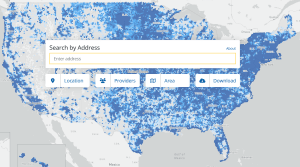
 On August 22, the FCC threatened significant fines for eleven ISPs that failed to participate in the FCC broadband data collection and mapping process. All eleven ISPs have now missed three biannual filings to the FCC which describes where they provide service, the technologies they deploy, and the speeds they offer to customers. All ISPs are required to provide data to the FCC Broadband Data Collection (BDC) system twice per year to document coverage as of June 30 and December 31.
These ISPs have been issued several warnings from the FCC to begin complying with the broadband mapping rules. In this recent order, the FCC gave the ISPs 30 days to respond to the order. Within the 30 days, each ISP must either file a written statement to the FCC, hold a teleconference, or meet live with the closest FCC Field Office. The FCC said that failure to meet that deadline could result in a fine not to exceed $24,496 per day or a maximum fine of $183,718. Each ISP was ordered to report data retroactively for the December 2023 data collection process.
The ISPs include: A.C.T.S. LLC, of Moweaqua, IL; City Wireless of Star City, AR; Community Cable and Broadband of Brent, AL; Crazy Communications of Lorraine, KS; FiberSpark of Ithaca, NY; Gila Broadband of Concho, AZ; Internet Services of Big Rapids, MI; Simple Fiber Communications of Bedford, TX; Telecast Communications of Upton, KY; and WIFAST of Jacksonville, FL
The FCC had warned all ISPs when it first created the new BDC reporting system that there would be significant fines for non-compliance.
This is not the first set of fines related to broadband reporting to the FCC. In March, the FCC fined Jefferson County Cable of Toronto, Illinois $10,000 for making false claims about providing fiber service that didn’t exist. The company admitted that it made the false filing to prevent another ISP from winning grant funding for the area.
For folks who work with broadband maps every day, the fines I’d really like to see are for ISPs that distort the reported broadband speeds that are available to customers. In this period of broadband grants, an ISP that claims it can deliver a speed of 100/20 Mbps effectively stops other ISPs from receiving grant funding, the same as was done by Jefferson County Cable.
But we’ll never see fines for misstated speeds since the FCC gave permission to ISPs to do so. The BDC map rules allow ISPs to claim marketing speeds rather than some approximation of actual speeds.
Of course, the whole idea of setting a specific speed that defines broadband versus non-broadband makes the speed an attractive target for exaggerated speed claims. What degree of speed exaggeration would an ISP need to make to violate the intentions of the FCC reporting rules? If an ISP is delivering maximum speeds of 75 Mbps, is it wrong for it to claim 100/20 Mbps and, in doing so, block grant funding from others to improve broadband? What if the actual speeds being delivered are 50 Mbps, or 25 Mbps, or 10 Mbps? Is there degree of speed exaggeration that would make the FCC consider a fine for over-reporting?
I think this is going to end up in courts. The falsification one is propable going to stick, but the FCCs ‘policy’ requirement that allows for fines is murky at best.
In an new twist, broadband maps are being weaponized by ISPs against the regulating agencies. Will mapping errors result in penalties or fines?
The context is that AT&T is fighting the California CPUC for relief from COLR obligations. AT&T cites that “the government maps are the best available source of broadband coverage data” in their filing for R2406012 on 10/30/24 to the CPUC. And they are using this data to argue for relief.
AT&T hired a consultant to analyze the mapping data and show why regulated landline service is no longer required or appropriate. AT&T claims that “more than 99 percent of the serviceable locations in AT&T California’s service territory have three or more facilities-based broadband providers” and that “almost 100 percent of the population has access to at least two voice providers”.
According to AT&T, 490K California residential households maintain AT&T landlines. That is 3.6% of the 13.5M households in California. AT&T claims somewhere between 0 and 135K households (1% of 13.5M) have no other alternative besides landline service. That implies that over 70% of AT&T’s landline subscribers are chosing to pay for an AT&T landline even though they have other options which, according to AT&T, better and more desirable. Or maybe those subscribers know something that AT&T doesn’t know or doesn’t want to acknowledge.
Up until now, the broadband maps have been used to justify funding for broadband to unserved areas. Mapping errors could deny funding or result in wasted funding. If AT&T wins this battle, the maps may be used to eliminate telephone service to locations unfortunate enough to be incorrectly classified. Will there be any recourse or penalties if service is cut off?