
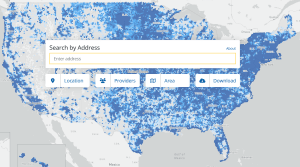
 We just spent a few years agonizing over the FCC broadband maps. The reasons we’ve cared is easy to understand. The FCC maps were first used to allocate BEAD funding to states. States that spent a lot of time to clean up the maps seem to have gotten a better share of the BEAD funding, while other states were badly shorted. The concept behind using the maps for this purpose made sense – but only if the maps were relatively accurate in different regions of the country.
The FCC maps became even more important as states conducted BEAD map challenges. These challenges were to define which specific homes get BEAD (and which ones don’t). In some states the map challenge has seen a lot of participation from ISPs and local communities, but in many states the process didn’t see a lot of vigorous challenges.
We’ll soon be at the end of the BEAD map challenges, and that makes me wonder if anybody will ever care about the FCC maps after this. The original purpose of the FCC maps was for the FCC to count homes with and without broadband. The maps have been terrible at this since they were first introduced for the simple reason that the FCC presumes that self-reported speeds from ISPs reflect the real-world speeds available to people. The FCC definition of broadband is currently 100/20 Mbps, and there are a lot of ISPs that miraculously claim that as the speed of their networks in the FCC maps.
It’s hard to think of any motivation for the FCC to make the maps better. The agency can accept the speeds reported by ISPs, and once BEAD grants are awarded and RDOF areas start being built, the FCC can claim with a fairly straight face that all of rural America has broadband. At that point, the FCC is likely going to declare job done. For the last decade, the FCC has issued annual broadband reports to Congress that have said that the state of broadband is good and is improving – all based upon maps that everybody knows grossly overstate both broadband speeds and coverage. I can’t see any future motivation for the FCC to highlight that there are still homes without good broadband.
This will be even easier if the FCC decides that Starlink and Kuiper are broadband. It won’t matter if the satellite companies have a limit on the number of customers they can serve – the FCC can decide to accept their speed claims at any given home.
The FCC has options if they are ever motivated to really measure broadband coverage. They could start by eliminating the ability of ISPs to claim marketing speeds instead of some approximation of actual speeds. The FCC could get serious about enforcing coverage claims of where an ISP can meet the 10-day installation rule. The FCC could compare Ookla or other speed tests against the speeds claimed by ISPs – and the FCC could challenge ISPs where claimed speeds are far higher than speed tests. I don’t see the FCC ever being willing to get that aggressive with ISPs – and this process would be extremely contentious.
I’m positive that when BEAD is over, the FCC and everybody else will lose interest in the broadband maps. I also believe that we’ll still have millions of rural homes without a good broadband option. I predict that states that still want to solve the remaining broadband gaps will revert to creating their own state maps like they did before BEAD. But for the most part, rural broadband will be claimed to be solved – until the day comes when the FCC is forced to increase the definition of broadband speed again – and then we’ll start all over.
In the 1st Session of the 118th Congress Senate Bill #1162 and H. R. Bill # 3609 were introduced to prevent the use of the FCC’s flawed and inaccurate Broadband Fabric data as the “source of truth” for allocating the broadband infrastructure funds. Unfortunately they remained in their assigned Committees and the FCC failed to comply with repeated requests from Congressional, State, and Federal leaders to audit, validate, and improve the accuracy of the Broadband Fabric, the data source that is used to populate the nation’s broadband maps
The FCC’s June 2023 broadband Fabric data, was used to determine the allocation of the $42 billon IIJA BEAD infrastructure funds. The 2023 Fabric was far from accurate as suspected, one state was allocated funds for over 259,000 Unserved locations. The state’s approved list of eligible Unserved BEAD Grant Program BSLs, approved by the NTIA in January 2025, includes 58,652 (22.6%) Unserved locations. The Fabric data in this state includes over one thousand structures that are not Broadband Serviceable Locations (Barns, Outbuildings, Covered (no walls) Areas, and Stables.
The state of Nevada has submitted a state-wide “Waiver Request” to eliminate the required matching funds in an effort to reach more of its unserved and underserved locations. The funds should be re-allocated based on current needs taking into account the results from the State ARPA grant programs, NTIA BEAD challenge results, and the elimination of all structures that are not households or small businesses.
Do you think that the FCC maps for mobile broadband will still be of importance? The BEAD maps and the mobile maps seem to be two different animals.